

The Charlie Kirk Case: The Evidence That Doesn’t Seem to Fit
There is a difference between a conspiracy theory and a question. And somewhere along the way, we seem to have forgotten that.
When Charlie Kirk was assassinated at Utah Valley University on September 10, 2025, the country watched pieces of the investigation unfold almost in real time. There was a manhunt. There were surveillance images. There was a rifle. There were reports about ammunition. Then came an arrest.
Twenty-three-year-old Tyler Robinson was charged with aggravated murder and other offenses, and prosecutors announced that they intend to seek the death penalty if he is convicted.
Since then, the public has largely split into two camps. One believes the case is essentially solved. The other believes almost nothing about the official account. But after five days of preliminary-hearing testimony in July 2026, neither extreme is a particularly responsible way to examine this case. Because prosecutors have presented substantial evidence they say connects Robinson to the killing.
There are also pieces of evidence the defense has challenged, investigative loose ends that have been exposed publicly, and questions whose answers are considerably more complicated than some early headlines suggested.
So we’re going to do something increasingly rare on the internet. We’re going to look at both. Not because Tyler Robinson is innocent. Not because Tyler Robinson is guilty.
A court has not made that determination. And not because every unanswered question automatically points toward some larger conspiracy. It doesn’t.
We’re looking because truth should survive examination. And as Christians, we should never be afraid of examining it.
“The one who states his case first seems right, until the other comes and examines him.” — Proverbs 18:17
That verse feels particularly relevant here. So let’s examine.
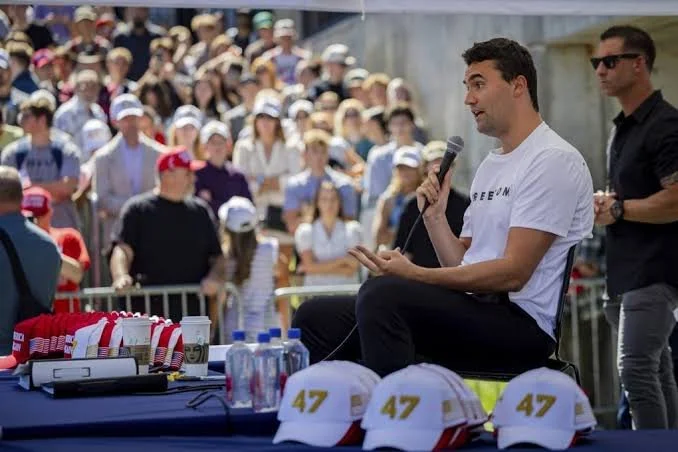
First: What Prosecutors Say Happened
Before examining problems with the evidence, we need to acknowledge how much evidence prosecutors have actually presented. According to investigators, surveillance footage tracks a person they identify as Robinson around Utah Valley University on the day Kirk was killed.
Investigators testified that footage shows him checking access to the building from which the shot allegedly originated, moving across the roof, assuming what an investigator described as a sniper position and fleeing afterward. A bolt-action rifle was later recovered wrapped in a towel in a wooded area near campus.
Investigators also recovered a screwdriver from the rooftop. Forensic testing produced DNA evidence that prosecutors say connects Robinson to multiple pieces of evidence.
Then there are the communications. Prosecutors presented messages in which Robinson allegedly admitted responsibility to his roommate and former romantic partner, Lance Twiggs. Twiggs also told investigators that Robinson confessed to him after the killing. Prosecutors introduced evidence of a note allegedly left by Robinson discussing an opportunity to kill Kirk. And shortly before surrendering, Robinson allegedly posted a confession in a Discord group.
That is important context.
If we’re going to investigate the strange pieces of this case, intellectual honesty requires acknowledging the evidence that isn’t particularly convenient for theories of Robinson’s complete innocence. But that’s not the end of the story. Because when Robinson’s defense finally had an opportunity to examine the state’s case publicly, they started asking questions. And some of them are worth understanding.
QUESTION ONE: Did the Bullet Actually Match the Rifle?
This is probably one of the most misunderstood pieces of evidence in the entire case. Earlier this year, headlines began circulating suggesting that the bullet that killed Charlie Kirk didn’t match the rifle allegedly connected to Robinson. That sounds enormous.
If investigators recovered the supposed murder weapon but the bullet didn’t come from it, wouldn’t that undermine the entire case? Except that’s not exactly what the evidence established.
An ATF examination was reportedly unable to conclusively identify a bullet fragment recovered from Kirk’s body as having been fired from the recovered rifle. Those words matter.
Unable to identify is not necessarily the same thing as determined it came from a different gun. The defense understandably emphasized the inconclusive finding. Additional firearm analysis was pursued.
During the July hearing, testimony indicated that investigators still could not conclusively determine that the bullet-jacket fragment recovered from Kirk originated from that specific rifle.
That is a limitation in the ballistics evidence. It should be reported as one. But it is also misleading to transform an inconclusive result into definitive proof that investigators recovered the wrong weapon.
Both statements can be true: The state has not conclusively matched the recovered bullet fragment to the rifle. And The testing cited publicly has not established that the fragment came from a different rifle either.
That distinction isn’t nearly as exciting as a viral headline. It is considerably more accurate.
QUESTION TWO: Then What Connects the Rifle to Robinson?
This is where the prosecution’s case becomes significantly stronger. DNA.
According to testimony presented during the preliminary hearing, Robinson’s DNA was detected on numerous areas of the recovered rifle, including its stock and grips, trigger area, bolt, fore-end, barrel and other portions.
His DNA was also associated with ammunition. The statistical results presented by investigators were extremely strong. There was also DNA evidence involving the towel wrapped around the rifle and the screwdriver recovered from the alleged sniper position.
Tests on the towel and screwdriver indicated mixtures involving Robinson and Twiggs.
That creates an obvious question: Why was Twiggs’ DNA there too?
There is an innocent explanation that immediately needs to be acknowledged. People who live together touch the same objects. Objects move. DNA transfers. The presence of someone’s DNA doesn’t automatically tell investigators when the DNA was deposited or how it got there. And Robinson’s attorneys made precisely that point.
An FBI analyst acknowledged that forensic DNA examinations are not described as infallible and that DNA evidence does not automatically prove a person directly touched an object. That doesn’t erase the DNA evidence. But it does establish its limits.
The question isn’t simply: “Was Robinson’s DNA found?” The answer to that appears to be yes.
The harder question is: “What exactly does its presence prove about the shooting?”
That will ultimately be something prosecutors and defense attorneys argue if the case reaches trial.
QUESTION THREE: Why Was There Another Bullet on Campus?
This one sounds extremely suspicious when presented without context. Investigators found another bullet on a different campus rooftop. Not where prosecutors say the fatal shot originated. A different building.
The round was reportedly a live .223-caliber cartridge. And yes, that absolutely deserved investigation. But there is another piece of the story.
Investigators have testified about ammunition found elsewhere during the enormous law-enforcement response to the shooting, including ammunition connected to officers clearing weapons.
In testimony concerning a separate questioned round, investigators said it was traced to a law-enforcement officer who had cleared his firearm, ejecting an unused cartridge. The .223 round discussed during other testimony was also located on a building investigators did not believe had a line of sight to Kirk’s tent.
So does another bullet automatically mean another shooter? No.
Does finding ammunition elsewhere at a massive crime scene deserve documentation and explanation? Absolutely.
That’s the distinction we need to keep making. Interesting evidence is not automatically incriminating evidence.
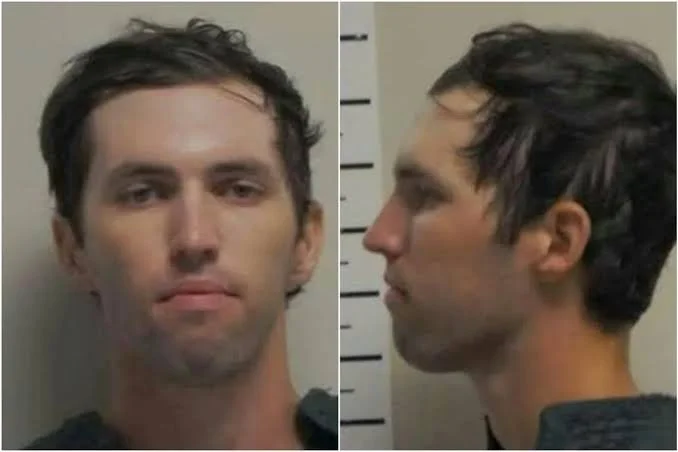
QUESTION FOUR: What About the Handgun Found in a Backpack?
Here’s another fact that sounds explosive when reduced to a TikTok sentence: A second gun was found on campus.
That is true. Robinson’s defense questioned an investigator about a handgun discovered inside a backpack following the shooting. But investigators testified that they examined it and determined the handgun was not evidence in the Kirk killing.
There’s another relevant fact. Utah law allows qualifying adults to carry concealed firearms, and firearms on an Utah university campus are therefore not inherently evidence of a crime.
Again: Ask the question. But then listen to the answer.
The existence of another firearm at UVU doesn’t establish another shooter. If evidence eventually contradicts investigators’ conclusion, that’s different. Based on the public record currently available, however, the handgun itself hasn’t been connected to Kirk’s killing.
QUESTION FIVE: What Happened to the Empty Holster?
This question is harder to dismiss. Former UVU officer Christopher Bagley testified about finding an empty pistol holster in the courtyard after the shooting. Defense attorney Kathryn Nester questioned him about what happened to it. Bagley testified that he didn’t take custody of it and didn’t know whether it was ever fingerprinted.
Think about that. A political figure has just been shot. Thousands of people are fleeing. A massive crime scene is forming. And an empty gun holster is found on the ground. Maybe it belonged to someone legally carrying a weapon. Maybe it had absolutely nothing to do with the assassination. That’s entirely possible. But shouldn’t investigators know? That’s the more important question.
An unexplained holster does not prove another shooter existed. It does, however, illustrate one of the defense’s broader arguments: Was every potential lead adequately preserved and investigated?
That is a legitimate question.
QUESTION SIX: Why Did an Officer’s Body Camera Stop Recording?
This is another detail that immediately attracted attention. Bagley testified that his body camera stopped recording while he was investigating the roof of the Losee Center, the location prosecutors say the shooter used.
His explanation? He believed the battery died. He testified that he later charged the camera.
Again, there are two ways the internet tends to handle something like this.
One side says: “Body cameras die. There’s nothing here.”
The other says: “The camera mysteriously stopped recording at exactly the important moment. Cover-up.”
Neither conclusion is established merely by the camera stopping. But in a case this consequential, the missing footage matters. Body-camera footage provides an objective record of what officers encountered before a crime scene had been extensively processed.
We don’t have that record for at least part of Bagley’s rooftop investigation. That doesn’t prove misconduct. It does mean there is a gap. And acknowledging a gap isn’t the same thing as inventing what happened inside it.
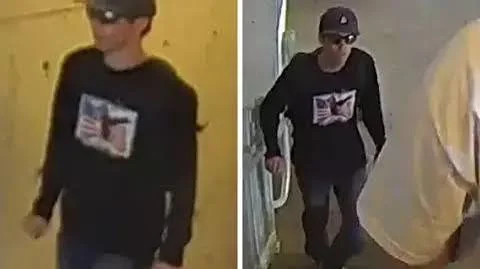
QUESTION SEVEN: How Strong Is the Surveillance Video?
The prosecution presented extensive surveillance footage. Investigators testified that they reviewed hundreds of hours of video from university cameras, nearby homes and footage supplied by witnesses. One investigator described footage allegedly showing Robinson moving around campus, checking roof access, climbing onto the roof and later positioning himself above the area where Kirk was speaking.
Footage also allegedly shows the figure running across the roof after the shooting and escaping toward nearby woods. That is significant evidence. But the defense challenged portions of the video evidence. Defense attorneys questioned authentication of certain recordings and raised concerns about whether some videos had been altered or enhanced.
Judge Tony Graf admitted some footage while refusing to admit other videos where authentication requirements had not been satisfied. That’s actually important for another reason.
The court wasn’t simply accepting everything prosecutors offered.
Evidence still had to satisfy evidentiary requirements. And there is another subtle point worth remembering. An investigator identifying someone in surveillance footage is evidence. It isn’t the same thing as facial recognition magically producing a scientifically unquestionable identification. The defense will have an opportunity to challenge how those identifications were made.
QUESTION EIGHT: Why Did Robinson Return Toward Campus?
One particularly strange piece of surveillance evidence concerns Robinson’s vehicle. According to testimony, footage allegedly shows Robinson returning toward the university area while the manhunt was already underway. Police reportedly stopped the vehicle from proceeding farther onto campus.
If prosecutors’ identification is correct, this creates an interesting behavioral question. Why return?
There could be numerous explanations. Investigators may interpret it one way. Defense attorneys may interpret it another. And that’s exactly why behavioral evidence should be treated carefully.
People frequently expect guilty people to behave according to a movie script. Real human beings don’t. Strange behavior isn’t automatically evidence of innocence. It isn’t automatically evidence of guilt either.
QUESTION NINE: What About the Alleged Confessions?
This may be the most difficult evidence for anyone arguing Robinson had nothing to do with the killing. Prosecutors haven’t presented just one alleged confession. They’ve presented several forms of purported admission.
According to evidence presented at the hearing, Twiggs told investigators Robinson confessed after returning home. Messages allegedly exchanged between the two contain statements in which Robinson accepts responsibility for what happened. Prosecutors also introduced evidence that Robinson posted to Discord shortly before surrendering and allegedly acknowledged responsibility there as well.
Then there is the note prosecutors say Robinson left. If authentic, voluntary and accurately contextualized, those pieces of evidence are extremely significant. Which means anyone genuinely investigating this case has to confront them.
We cannot spend twenty paragraphs discussing a dead body camera battery and then pretend multiple alleged admissions don’t exist. That’s not investigation. That’s selecting evidence to fit a predetermined conclusion. But the defense still has avenues to challenge these communications. Authentication matters. Context matters. How evidence was obtained matters. Whether statements are admissible matters. And ultimately a jury, not social media, would determine what weight they deserve.
QUESTION TEN: Why Was Twiggs Given Immunity?
This deserves attention because it has generated considerable speculation. Lance Twiggs wasn’t merely Robinson’s roommate. According to testimony, the two had previously been romantically involved. His DNA was also identified in mixtures on items connected with the crime scene. And Twiggs provided investigators with extremely damaging statements concerning Robinson.
At least one of his interviews was conducted under immunity agreements involving state and federal authorities. That sounds dramatic. But immunity does not automatically mean: “Twiggs committed the murder.”
Investigators and prosecutors can offer immunity for many reasons, particularly when they need a witness to speak freely about information that might otherwise expose that witness to criminal liability. And the immunity described publicly wasn’t necessarily unlimited protection for everything Twiggs could ever be accused of.
Still, because Twiggs is such an important witness—and because his DNA appeared on evidence, the exact scope of his immunity and the circumstances surrounding his cooperation are absolutely fair subjects for scrutiny.
The correct question isn’t: “Why did they protect the real killer?”
There is no evidence establishing that premise.
The question is: “What potential exposure required immunity, what information did prosecutors receive in exchange, and how should jurors evaluate testimony from an immunized witness?”
That’s a courtroom question. And an important one.
QUESTION ELEVEN: Was the Crime Scene Perfectly Handled?
No. And perhaps that’s one of the most important things this hearing revealed. There was an empty holster whose disposition one officer couldn’t explain. There was body-camera footage that stopped. Other weapons and ammunition had to be investigated and eliminated.
There were questions over video authentication. There were thousands of terrified people moving through and away from the scene. And only a small number of officers had initially been assigned to an event attended by thousands.
That sounds messy because mass-casualty crime scenes often are messy. And this is where we have to be particularly careful. A mistake is not automatically a conspiracy. An investigative oversight isn’t automatically evidence of a cover-up. An unanswered question isn’t automatically proof that the answer authorities gave us is false. But mistakes still matter. Especially when prosecutors are seeking to execute a defendant. The standard should be high.
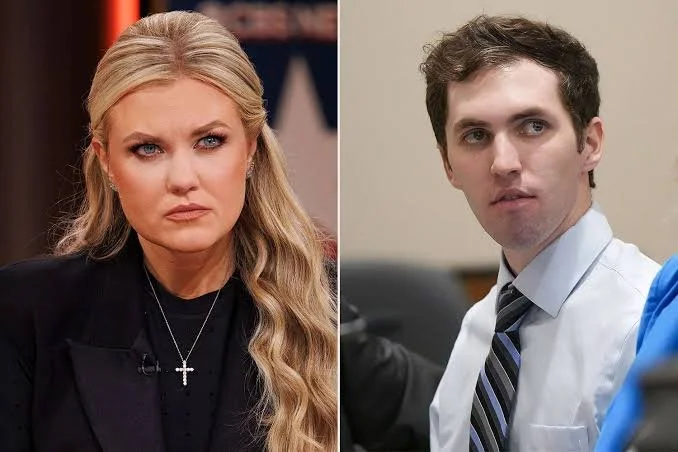
So… Does the Case Against Tyler Robinson Actually Fall Apart?
Based on the evidence publicly presented so far? No. And I think we have to say that clearly. The state has presented surveillance evidence.
It has presented extensive DNA evidence. It has a recovered rifle. It has ammunition and forensic evidence prosecutors say connects Robinson to the weapon. It has testimony concerning his movements. It has statements from people close to him. And it has multiple alleged admissions.
That is not a case built around one blurry photograph. But neither should we pretend every question has disappeared. The bullet fragment has not been conclusively matched to the recovered rifle. Some aspects of DNA evidence have limitations. The crime scene produced items investigators had to rule out.Potential evidence apparently wasn’t always preserved perfectly. Some surveillance evidence has been contested. And the defense is challenging whether prosecutors have actually established every element required for the charges they filed.
That’s precisely why trials exist.
The Question That Both Sides Get Wrong
Here’s where I think Christians especially need to be careful. There is a temptation to decide what we believe first and then search for evidence afterward. If we believe Robinson did it, every inconsistency becomes irrelevant. If we believe something larger happened, every inconsistency becomes proof of conspiracy.
Neither is discernment. That’s confirmation bias wearing a different outfit. Scripture doesn’t tell us to accept every authority unquestioningly.
It also doesn’t tell us to distrust every authority automatically. It tells us: “Prove all things; hold fast that which is good.” — 1 Thessalonians 5:21
Test it. That includes the government’s story. It includes the defense’s story. It includes the media. It includes Turning Point USA. And yes, it includes the independent commentator with a microphone telling you that she has uncovered what everyone else is hiding.
Everybody gets tested.
There Are Still Things We Don’t Know
And maybe we’ve become uncomfortable saying that sentence. We don’t know everything yet. Tyler Robinson has not been convicted.
At the time of writing, Judge Tony Graf still has not determined whether prosecutors have established probable cause sufficient to bind Robinson over for trial on the charges.
Oral arguments on that question are scheduled for September 1, 2026. The probable-cause hearing isn’t a trial. The judge isn’t deciding whether Robinson is guilty beyond a reasonable doubt. He’s deciding whether prosecutors have produced sufficient evidence for the case to proceed. And if it does proceed, the evidence we’re examining now will face much more scrutiny.
So I’m not going to tell you: “Nothing to see here.”
But I’m also not going to tell you: “This proves the official story is a lie.”
Neither conclusion is justified by the public evidence right now. Instead, I’m going to keep asking questions. Because there are more. And some of the biggest questions surrounding Charlie Kirk’s death don’t concern the rifle at all.
They concern what was happening around Charlie before he died. His organization. His relationships. His donors. The people closest to the movement he built. And the claims that have emerged since his assassination. That’s where we’re going next.
A Final Biblical Warning
Before we do, I want to leave you with something I think every Christian consuming this story needs to remember. Questions are not accusations. Suspicions are not evidence. And repetition does not transform a rumor into truth.
God cares deeply about justice. But He also cares deeply about false accusation.
“Thou shalt not bear false witness against thy neighbour.” — Exodus 20:16
That commandment doesn’t disappear because the person we’re talking about is famous. It doesn’t disappear because we don’t trust
