

The Charlie Kirk Case: What We Know, What We Don’t, and the Missing Pieces
There are two ways to get the Charlie Kirk case wrong. The first is to accept every piece of the official narrative without ever asking a question. The second is to assume that because questions exist, the darkest explanation must automatically be true.
Neither is discernment. And Christians, of all people, should understand that.
“The one who states his case first seems right, until the other comes and examines him.” — Proverbs 18:17
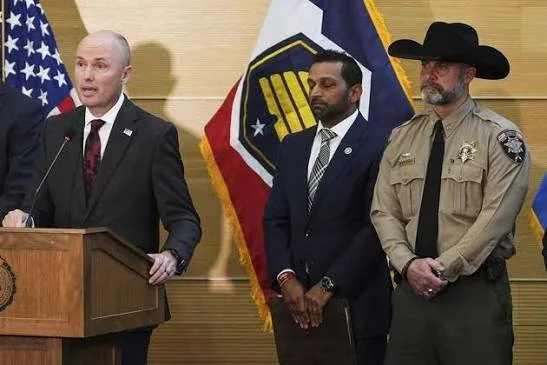
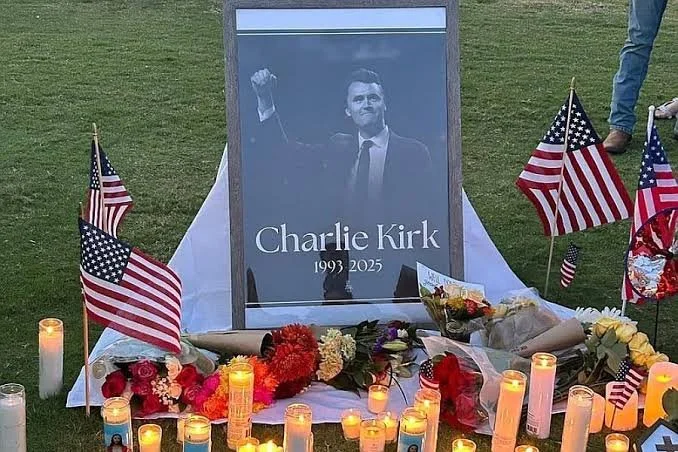
Charlie Kirk was killed on September 10, 2025, while speaking at Utah Valley University. Within roughly a day, authorities had a suspect: Tyler James Robinson.
Since then, the public has watched one of the most politically explosive murder cases in modern America unfold in real time. We have been shown surveillance footage. We have heard about a rifle. DNA. Engraved ammunition. Text messages. Discord messages. A handwritten note. An alleged confession.
And prosecutors have built a case they believe is strong enough not only to convict Robinson, but potentially to put him to death.,But something else has happened alongside the criminal case.
Millions of people have begun asking questions. Some of those questions are reasonable. Some are based on incomplete information. Some have already been answered in court. And some theories circulating online go far beyond anything the available evidence currently establishes.
That distinction matters. Because asking questions is not the same thing as making accusations. And this series is going to ask questions. A lot of them. But we’re also going to do something the internet doesn’t always do very well: We’re going to follow the evidence even when it ruins the theory.
First: Tyler Robinson Has Not Been Convicted
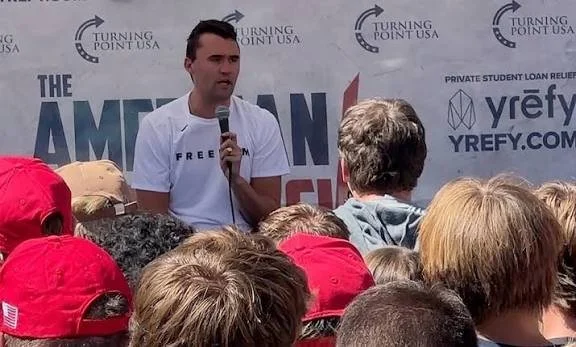
This needs to be said before anything else. Tyler Robinson is the man prosecutors accuse of killing Charlie Kirk. He has not been convicted of killing Charlie Kirk.
As of this writing, he has not even entered a plea. The proceeding happening right now is not his murder trial. It is the preliminary stage of the case.
Robinson is charged with aggravated murder and additional offenses, and prosecutors have announced their intention to seek the death penalty if the case ultimately results in a qualifying conviction. But before there can be a trial, prosecutors must establish probable cause. That is what Judge Tony Graf is currently considering.
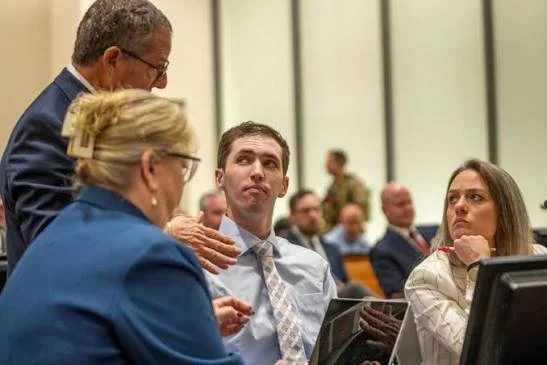
After five days of testimony in July, the prosecution and defense were given time to submit written arguments. They return to court September 1 for oral arguments over whether the evidence is sufficient for Robinson to be ordered to stand trial. That distinction matters. A preliminary hearing does not determine whether Robinson is guilty beyond a reasonable doubt. The question is essentially whether prosecutors have presented enough evidence to reasonably believe that the crime occurred and that Robinson committed it.
That is a much lower standard than the one prosecutors would eventually face at trial. So when you hear someone say: “The trial already proved…” Stop. It hasn’t. And when you hear: “There’s no evidence against Robinson.” Stop there, too. Because that isn’t accurate either. There is evidence. A significant amount of it.
The real question is what that evidence proves.
What Prosecutors Say Happened
The prosecution’s theory is relatively straightforward. They allege Robinson came to Utah Valley University on September 10, moved around the campus, accessed the roof of a building and ultimately positioned himself where a shot could be fired toward Kirk. Kirk was appearing at the university as part of his American Comeback Tour.
While speaking before the crowd, Kirk was struck by a single bullet. He died at 31 years old. Investigators later recovered a bolt-action rifle wrapped in a towel in a wooded area near campus. And from there, prosecutors say the evidence begins pointing toward Robinson. But instead of simply accepting that statement, let’s look at what they actually have.
The Surveillance Footage
One of the prosecution’s strongest pieces of evidence may be surveillance video. During the July preliminary hearing, investigators walked the court through footage they say tracked Robinson’s movements around Utah Valley University.
According to testimony, video showed him checking access to the building from which prosecutors say the fatal shot was fired. Investigators also testified that surveillance footage showed a person on the rooftop moving into what they described as a sniper position shortly before the shooting.
After the shot, the figure moves across the building. Investigators identified that person as Robinson. That matters. But notice the wording. Investigators identified the person as Robinson.
A courtroom eventually deciding that identification is correct beyond a reasonable doubt is a different matter. That is exactly why trials exist.
Then There Is the Rifle
Authorities recovered a bolt-action rifle wrapped in a towel in a wooded area near the university. Prosecutors allege it was the murder weapon. And this is where the case becomes both stronger and more complicated. DNA testing connected Robinson to items associated with the weapon.
At the preliminary hearing, a forensic biologist testified that certain DNA results from parts of the rifle were at least one trillion times more likely under a proposition that included Robinson as a contributor than under a proposition involving only unknown unrelated individuals. That sounds devastating. And it certainly isn’t evidence that can simply be brushed aside. But there is an important nuance.
DNA analysts do not necessarily testify in the simplistic language we often see in headlines: “His DNA was definitely on the gun, therefore he fired it.” DNA evidence can tell investigators enormously important things. It cannot automatically tell them when someone touched something, why they touched it, or exactly how DNA arrived there.
Robinson’s defense spent significant time questioning the methodology and interpretation of the DNA testing. That doesn’t mean the DNA evidence is false. It means the defense is doing what defense attorneys are supposed to do: challenge the state’s evidence before the state is permitted to take someone’s liberty, or potentially their life.
And Then We Get to the Bullet
This is one of the details that deserves more attention. The defense previously highlighted an ATF ballistics report concerning the bullet recovered from Kirk’s body. The examination was reportedly unable to conclusively identify that bullet as having been fired from the rifle prosecutors associate with Robinson.
During the preliminary hearing, the defense continued challenging the ballistics evidence. And immediately, you can see how the internet handles something like this.
One side says: “The bullet didn’t match the gun!”
The other says: “That doesn’t matter!”
Neither statement accurately captures the situation. An inconclusive ballistics result does not establish that the bullet came from another weapon. But it also isn’t the same thing as a conclusive forensic match. That distinction matters. Especially in a case where prosecutors may eventually ask a jury to authorize the death penalty.
We should be able to say that without turning it into a conspiracy.
The Handgun People Were Talking About
Here’s a perfect example of why we need to separate unanswered questions from questions that have actually received answers. During the preliminary hearing, Robinson’s attorney asked an investigator about a handgun discovered inside a backpack on campus following the shooting.
If you only heard: “ANOTHER GUN WAS FOUND ON CAMPUS.”
That sounds enormous. Except investigators testified that they examined it and determined the handgun was not evidence in the case. Could someone question how investigators reached that determination? Certainly. But we cannot honestly report the existence of the handgun as though law enforcement simply ignored a mysterious second murder weapon.
That leaves out the other half of the evidence. This is exactly how conspiracy theories grow. A true fact gets separated from the context surrounding it. And suddenly the true fact is being used to prove something it never actually proved.
Then Come the Messages
This may ultimately become one of the most difficult pieces of evidence for Robinson’s defense. Prosecutors have presented communications they attribute to Robinson. According to evidence introduced during the proceedings, a Discord message attributed to Robinson told friends that it had been him at UVU and that he was about to surrender.
Prosecutors have also introduced communications between Robinson and his then-roommate and romantic partner, Lance Twiggs. And there is a handwritten note prosecutors allege Robinson left indicating that he had an opportunity to kill Kirk and intended to take it. Twiggs has also described statements from Robinson after the shooting that prosecutors characterize as admissions. Taken together, prosecutors argue these communications amount to extraordinarily powerful evidence.
The defense has fought over the admission and public release of some of this material, arguing in part that portraying the communications publicly as confessions threatens Robinson’s ability to receive a fair trial.
Again: That doesn’t prove the messages aren’t authentic.
But the defense is entitled to challenge how evidence was obtained, authenticated, interpreted and presented.
What About Motive?
This is another area where people should be extremely careful. Prosecutors allege Kirk was targeted because of his political and religious views. They have pointed toward Robinson’s alleged communications and ammunition containing political messages.
One engraving prosecutors have emphasized contained an anti-fascist insult. Authorities have also described Robinson as having increasingly different political views from members of his family. But motive is not the same thing as identity.
Even if prosecutors convincingly establish political hostility toward Charlie Kirk, they still have to establish that Robinson committed the crime. And if this proceeds to trial, prosecutors will eventually have to prove the charges under a much higher standard than probable cause.
So Why Are So Many People Still Asking Questions?
This is where the story gets uncomfortable. Because it would be easy to dismiss everyone questioning this case as a conspiracy theorist. But that would be intellectually lazy.
Charlie Kirk wasn’t simply a random murder victim. He was one of the most recognizable conservative political activists in America. He co-founded Turning Point USA. He had enormous political influence. He had relationships with donors, politicians, media figures and some of the most powerful people in conservative politics.
He was assassinated publicly. In front of cameras. At a political event. Of course people are going to ask questions.
They should ask questions. The problem begins when: “I have a question” quietly becomes “Therefore I know the answer.”
Those are not the same thing.
The Erika Kirk Question
And yes, we are going to talk about Erika Kirk in this series. Because it would be almost impossible to honestly discuss the public controversy surrounding Charlie’s death without discussing his widow.
After Charlie’s death, Erika assumed leadership of Turning Point USA. Since then, her behavior, statements, leadership position and public appearances have been dissected online.
Some people believe aspects of her behavior are strange. Others believe the scrutiny of a murdered man’s widow has become cruel and grotesque. And far more serious allegations have circulated online.
Here’s where I’m drawing the line: A person’s behavior seeming strange to you is not evidence that they participated in murder.
Read that again. Grief doesn’t have a universally approved facial expression. Someone becoming CEO doesn’t establish involvement in her husband’s death. An awkward interview isn’t forensic evidence. A strange coincidence isn’t automatically a conspiracy.
If there is documented evidence involving Erika, we can examine it. If there are contradictions in her statements, we can examine them. If there are legitimate questions involving Turning Point USA, money, leadership, relationships or the timeline, we can examine those too. And we will. But accusing a widow of involvement in her husband’s assassination requires something dramatically more substantial than: “Something about her feels off.”
Especially for Christians. Because Scripture doesn’t give us permission to destroy someone’s reputation because our intuition told us something.
And Yes, We Need to Talk About Turning Point USA
That deserves its own investigation.
What was happening inside TPUSA before Charlie died?
What happened immediately afterward?
How was leadership transferred?
What was happening with donors?
Were there internal conflicts?
What claims about the organization have actually been substantiated?
Which ones originated online and simply began getting repeated until people assumed they were established facts?
What did Charlie himself say publicly before his death?
And perhaps most importantly: Is there evidence connecting any of those issues to his murder?
Those are very different questions. We shouldn’t collapse them into one. An organization can have internal conflict without assassinating its founder. A widow can make decisions people find questionable without killing her husband. A suspect can have substantial evidence against him while unanswered questions about an investigation still exist. Multiple things can be true simultaneously.
The Missing Pieces Matter. But So Does the Evidence We Already Have.
This is where I currently land after looking at the case. There are questions worth investigating. There are pieces of forensic evidence that deserve scrutiny. There are claims circulating about TPUSA that deserve fact-checking. There are questions being raised about Erika Kirk that deserve to be separated into documented facts, legitimate questions and unsupported accusations. There are details about the investigation that deserve examination. But there is also substantial evidence against Tyler Robinson.
Pretending otherwise doesn’t make us independent thinkers. It makes us guilty of doing exactly what we accuse everyone else of doing: ignoring inconvenient evidence because it doesn’t fit our preferred narrative.
If Robinson’s DNA is connected to relevant evidence, we examine it. If the ballistics examination is inconclusive, we examine that too. If surveillance footage supports the prosecution, we don’t hide it. If the defense exposes a genuine weakness, we don’t hide that either. If a claim against TPUSA is unsupported, we say so. If something genuinely doesn’t have a satisfactory explanation, we say that too.
Truth doesn’t need us to protect it from inconvenient facts.
Christians Need to Be Especially Careful Here
There is something deeply troubling happening within Christian internet culture. We’ve started using the word discernment to describe almost any suspicion we have. But suspicion isn’t a spiritual gift.Discernment does not mean assuming everyone is lying. It doesn’t mean distrusting every institution. And it certainly doesn’t mean believing whichever TikTok, podcast or X thread makes us feel like we’ve discovered information everyone else is too blind to see.
Scripture gives us a much more difficult standard.
“If one gives an answer before he hears, it is his folly and shame.” — Proverbs 18:13
And then, just a few verses later:
“The one who states his case first seems right, until the other comes and examines him.” — Proverbs 18:17
That principle applies in both directions. Don’t automatically believe the government. Examine the evidence. Don’t automatically believe the conspiracy theorist. Examine the evidence. Don’t automatically believe prosecutors. Examine the defense. Don’t automatically believe the defense. Examine the prosecution.
Don’t assume an allegation about Erika Kirk is true because someone you trust said it. Ask: What is the evidence?
Don’t assume TPUSA is above scrutiny because it represents political causes you support. Ask: What is the evidence?
And don’t assume Tyler Robinson is innocent simply because you’ve found something about the investigation you cannot immediately explain. Ask: What is the evidence?
That isn’t skepticism. That’s wisdom.
We Don’t Need to Be Afraid of the Truth
Maybe every major question surrounding this case will eventually receive a completely reasonable explanation. If so, Christians should accept that. Maybe additional evidence will reveal failures, inconsistencies or facts the public doesn’t currently understand. If so, Christians should accept that too.
Our loyalty cannot be to a theory. It cannot be to Turning Point USA. It cannot be to Erika Kirk. It cannot be to Tyler Robinson. It cannot be to a political party. It cannot be to a favorite commentator.
Our loyalty has to be to truth.
Jesus didn’t say: Believe whichever narrative confirms what you already think.
He said: “I am the way, and the truth, and the life.” — John 14:6
Truth belongs to God. Which means Christians should never be afraid of investigating it. But we should also never use the pursuit of truth as an excuse to bear false witness. Those two responsibilities have to exist together.
Ask the uncomfortable question. Demand the evidence. Listen to the answer. And then be humble enough to change your mind.
So Where Does That Leave the Charlie Kirk Case?
Right now?
With a lot more evidence than some corners of the internet acknowledge. And more questions than others seem comfortable discussing. Tyler Robinson is accused of assassinating Charlie Kirk. Prosecutors have presented surveillance footage, forensic evidence, alleged written admissions, digital communications and witness testimony that they argue connect him to the killing.
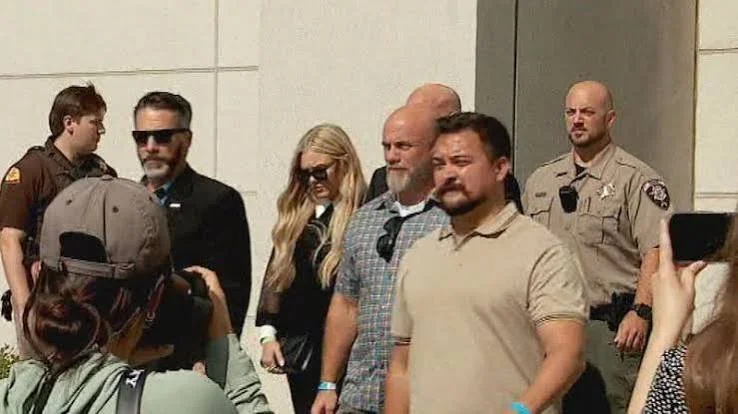
His defense has challenged portions of that evidence, including DNA analysis, ballistics evidence and aspects of the prosecution’s legal theory. Robinson has not been convicted. Judge Tony Graf still has to determine whether prosecutors have established probable cause sufficient for the charges to proceed toward trial. And on September 1, both sides return to court to make their arguments.
So no, we don’t have the ending yet. Which means maybe we should stop pretending we do.
Coming Next:
Part Two: The Charlie Kirk Evidence That Doesn’t Seem to Fit
We’re going piece by piece through the evidence people keep pointing to online—the rifle, bullet, DNA, surveillance footage, additional weapons, timeline and other alleged inconsistencies.
Not to prove a conspiracy. Not to defend the official narrative. But to answer one question: What actually holds up when we examine the evidence?
Pocket Prayers Daily | The Daily Bread
Truth over narrative. Scripture over speculation. Christ over politics.
