

The Bible: Book #13 What It Says, Why It Matters, & How to Live It
1 Chronicles
Remembering Who You Are When Everything Has Been Lost
First Chronicles is the book of remembering.
It is written after exile, after collapse, after the temple has been destroyed and God’s people have been scattered. If 2 Kings ends in loss, 1 Chronicles begins by doing something surprising:
It looks backward. But this is not nostalgia. This is identity restoration.
1 Chronicles asks a deeply pastoral question:
Who are God’s people after failure, exile, and loss—and does God still have a future for them?
1. What 1 Chronicles Is About (The Big Picture)
Author: Traditionally attributed to Ezra or a post-exilic priestly historian
Audience: Israelites returning from Babylonian exile
Setting: After the exile, reflecting on Israel’s past to shape its future
Unlike Samuel–Kings, which emphasize political failure and consequence, Chronicles is intentionally selective. It retells Israel’s story with a different purpose:
to restore identity
to remind the people of God’s covenant
to refocus worship
to center hope
This book is written not for those in power, but for a wounded, rebuilding community.
2. What 1 Chronicles Reveals About God
First Chronicles reveals a God who is:
Faithful across generations — even when people fail
Committed to covenant — especially with David
Concerned with worship — not just kings
Restorative — rebuilding after judgment
Purposeful — shaping the future through remembrance
God is not rewriting history. He is reframing it through grace.
3. Major Themes in 1 Chronicles (Extended)
1. Identity Before Activity
Before rebuilding walls or temples, God restores memory. The people must remember who they are before deciding what to do.
2. God’s Covenant Still Stands
Despite exile, God’s promise to David is not revoked.
3. Worship at the Center
Priests, Levites, musicians, and worship order receive more attention than military strategy.
4. Hope Through Continuity
The future is built by remembering God’s past faithfulness.
5. God’s Presence Over Political Power
Chronicles minimizes kingship failures and emphasizes God’s dwelling among His people.
4. Key Sections You Need to Understand
The Genealogies (1 Chronicles 1–9)
These chapters feel tedious, but they are deeply pastoral.
They say to a displaced people:
You still belong.
Your story still matters.
Your lineage is not erased.
Names restore dignity.
David Reframed (1 Chronicles 10–21)
Chronicles retells David’s story differently than Samuel.
Bathsheba is omitted
the focus is worship, leadership, and preparation
This is not denial, it’s redemptive focus. God highlights what He is still building through David’s line.
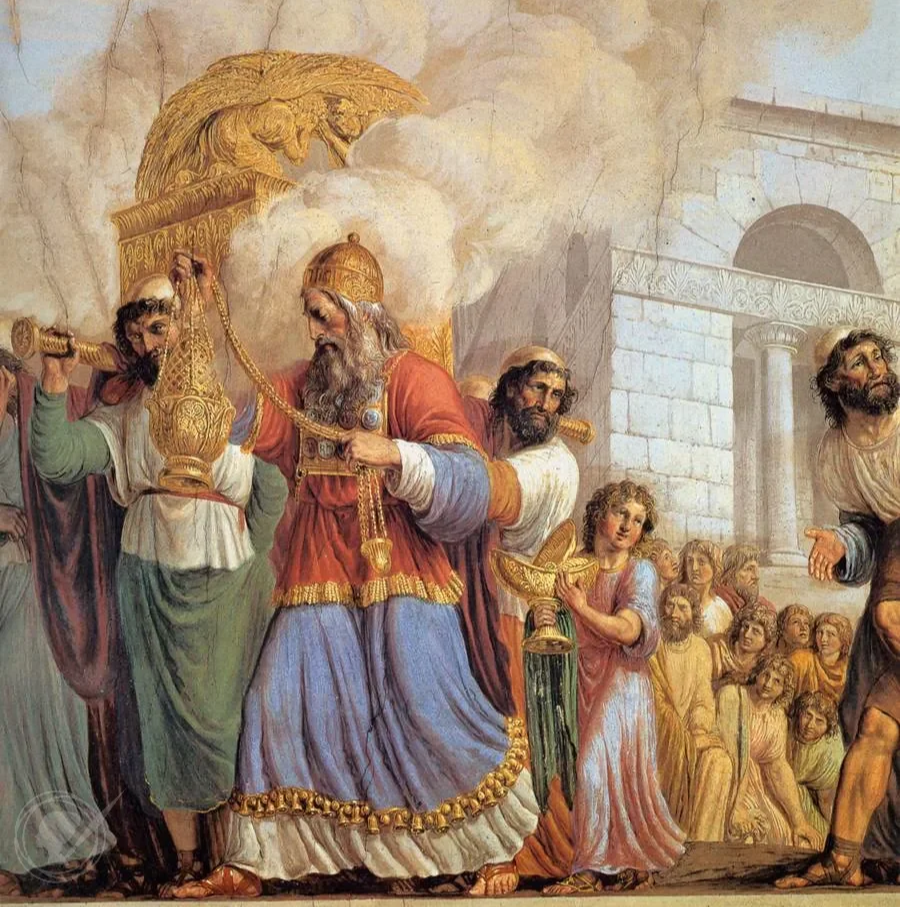
The Ark and Worship (1 Chronicles 13–16)
David prioritizes God’s presence over political security.
Worship is joyful, ordered, communal, and central.
This reminds post-exilic Israel:
God’s presence, not power, is their strength.
Preparing for the Temple (1 Chronicles 22–29)
David does not build the temple, but he prepares everything for it.
This teaches a powerful truth:
Faithfulness is not always finishing the work, it’s preparing the way.
5. How 1 Chronicles Points to Jesus
Chronicles preserves the Davidic line intentionally.
Genealogies → lead forward to Christ
David’s throne → points to an eternal King
Temple focus → fulfilled in Jesus
Worship centrality → Christ as mediator
Chronicles holds space for hope that has not yet arrived. Jesus is that hope.
6. Common Misunderstandings About 1 Chronicles
❌ “Chronicles ignores sin”
It reframes history to restore hope, not to erase accountability.
❌ “Genealogies are filler”
They are theological statements of belonging.
❌ “This book repeats Samuel for no reason”
It repeats with purpose for healing and rebuilding.
7. Why 1 Chronicles Matters Right Now
First Chronicles speaks powerfully to modern believers:
When identity feels fractured → God restores memory
When failure feels final → God reframes the story
When rebuilding feels overwhelming → God begins with worship
When hope feels thin → God reminds us who we are
This book says:
Your worst chapter does not cancel your calling.
8. How to Read 1 Chronicles Without Skipping the Point
Read genealogies as restoration, not repetition
Watch how worship takes priority
Notice what the author chooses to emphasize
Read it as hope-shaping history
Helpful prayer:
“God, remind me who I am when shame tries to rewrite my story.”
9. A Devotional Reflection
First Chronicles teaches us that God restores before He rebuilds. He calls people by name. He re-centers worship. He reaffirms covenant. If you are coming out of a hard season; personally, spiritually, or culturally, this book gently speaks life:
You are still God’s people. The promise still stands. And the future is not finished.
10. Prayer
Faithful God,
When loss tries to redefine us, remind us who we are. Restore our memory of Your goodness and covenant love. Teach us to rebuild with worship at the center. Give us hope rooted not in circumstance, but in You.
Amen
