

Erika Kirk: The Timeline, the Controversies, and the Questions People Are Afraid to Ask
There is something I need to say before we talk about Erika Kirk. Being a widow does not make someone above questioning. But being questioned does not make someone guilty. Both of those statements matter. Because somewhere between Charlie Kirk’s assassination and the explosion of theories that followed it, Erika stopped being discussed simply as the wife of the murdered Turning Point USA founder.
She became part of the story. And depending on which corner of the internet you enter, you’ll encounter completely different versions of her. One version portrays Erika as a grieving Christian widow courageously picking up her husband’s mission while raising their two young children. Another portrays her as an ambitious woman who inherited an extraordinarily powerful organization only days after her husband’s death. And the darkest corners of the internet go considerably further; suggesting she knows more about Charlie’s assassination than she has revealed or was somehow involved in what happened.
Those are extraordinarily serious accusations. And at this point, there is no credible evidence establishing that Erika Kirk participated in Charlie Kirk’s murder. We need to say that clearly. But saying that doesn’t require us to stop asking questions.
In fact, this entire series has been built around a simple principle: We don’t protect narratives. We examine evidence.
So let’s examine Erika. Not as a villain. Not as a saint. Not as a conspiracy theory. As a person who suddenly found herself sitting at the center of one of the most consequential political assassinations in modern America. And let’s ask what actually happened.
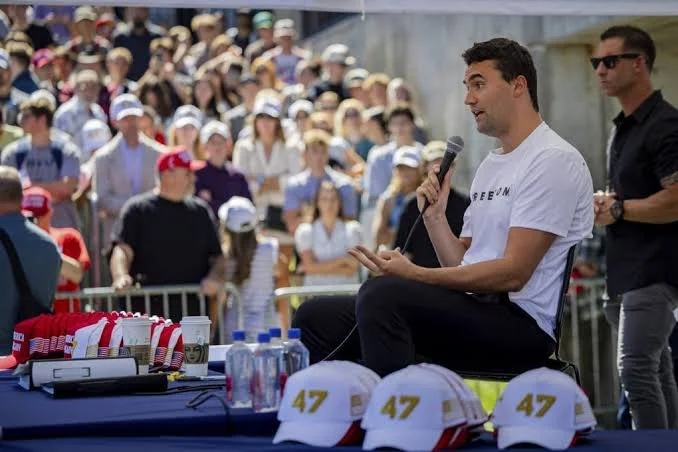
September 10, 2025
Charlie Kirk was speaking at Utah Valley University when he was shot and killed. He was 31 years old. Within a remarkably short period of time, the country went from watching Charlie debate students on college campuses to watching his assassination dominate national news.
A suspect, Tyler Robinson, was subsequently arrested and charged. Prosecutors have since presented evidence they say ties Robinson to the killing. His guilt, however, has not yet been determined at trial.
That distinction remains important throughout this series. An accusation isn’t a conviction. But something else was happening simultaneously.
Charlie Kirk wasn’t merely a husband and father. He was the founder and face of an enormous political organization. Turning Point USA had become deeply embedded within conservative politics.
Charlie had access to some of the most powerful people in the country. He had major donors. He had an enormous media platform. He had influence over young conservative voters. And suddenly he was gone.
Which created an immediate question: Who takes over?
The answer came eight days later.
Eight Days After Charlie’s Death, Erika Kirk Became CEO
On September 18, 2025, Turning Point USA announced that its board had unanimously elected Erika Kirk its new CEO and chair. Eight days. That’s one of the facts that has fueled suspicion online. But the number alone doesn’t tell us what happened. According to TPUSA’s board, Charlie had previously told multiple executives that he wanted Erika to lead the organization if he died. TPUSA COO Tyler Bowyer publicly reinforced that account.
So the official explanation is straightforward: This wasn’t an improvised decision made after Charlie was murdered. Charlie had already communicated his wishes.
If that’s true, the rapid transition makes considerably more sense. But there is an important detail.
Before Charlie’s death, Erika was certainly connected to the organization through her husband and had appeared at TPUSA events. Yet she had not held a formal role at Turning Point USA.
Then, eight days after his assassination, she wasn’t given a small advisory position.
She became: CEO. And Chair of the Board.
Of one of the most influential conservative organizations in America. That is a massive transition. And asking how that succession plan was established is not unreasonable.
Did Charlie Leave This in Writing?
This is one of the questions I think deserves a clearer public answer. TPUSA has said Charlie communicated his wishes to multiple executives. That’s evidence. Multiple people allegedly heard the same instruction. But the public discussion has largely centered on what Charlie said rather than a publicly produced succession document saying: If I die, Erika becomes CEO and chair.
That doesn’t mean such documentation doesn’t exist. And it doesn’t mean the executives are lying. Organizations frequently make leadership decisions based on conversations, board votes and established relationships. But given the extraordinary circumstances surrounding Charlie’s death, people understandably want more than: Trust us. This is what Charlie wanted.
And this is where we have to be careful. Wanting documentation isn’t an accusation. It’s a request for transparency.
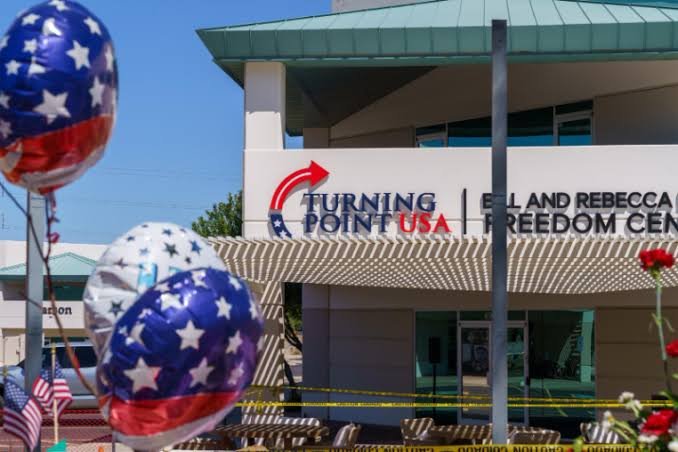
But There’s Another Question Nobody Seems to Ask
Why was Charlie discussing what should happen if he died?
Before anyone runs with that sentence: People plan for death. Responsible founders create succession plans. CEOs discuss emergency leadership. Parents make wills. People buy life insurance.
None of that means Charlie believed someone was going to assassinate him. In fact, an organization as large as TPUSA should have contingency plans for the sudden death or incapacity of its founder. The strange part isn’t necessarily that Charlie discussed succession.The interesting part is that the succession plan apparently involved his wife—someone who did not formally work for TPUSA—taking control of the organization.
Why Erika?
Maybe Charlie trusted her more than anyone. Maybe he believed she understood his mission better than executives did. Maybe he wanted his family to maintain influence over what he built. Maybe she had been preparing privately for responsibilities the public never saw.
All of those explanations are plausible. But I’d still like to understand the decision better.
Erika Wasn’t Completely New to Public Life
The image of Erika as a completely private stay-at-home wife suddenly thrown into politics isn’t quite accurate.
Before becoming TPUSA’s CEO, she had already built a public identity.
She had competed in pageants and won Miss Arizona USA. She had worked in real estate. She had pursued higher education. She had created a Christian clothing brand. She hosted a faith-oriented podcast.
She had appeared publicly with Charlie. She had spoken at Turning Point events. She had developed her own Christian messaging around marriage, femininity, homemaking and biblical submission.
So no, Erika wasn’t simply pulled out of obscurity. But running your own brand and appearing at your husband’s events is very different from overseeing an organization with enormous fundraising operations and national political influence.
Which brings us to another uncomfortable subject.
The Money
Turning Point USA wasn’t a small ministry. By the time Charlie died, TPUSA and its related entities were moving enormous amounts of money. Its major nonprofit arms collectively reported close to $100 million in revenue for 2024.
Another Turning Point entity reportedly held tens of millions more. Then Charlie was murdered. And something extraordinary happened. Interest in Turning Point exploded. Tens of thousands of people reportedly contacted the organization wanting to start new chapters.
Donors increased support. Charlie became something he never could have become while alive: A martyr. And martyrdom is incredibly powerful politically.
That doesn’t mean TPUSA wanted Charlie dead. It doesn’t mean Erika wanted Charlie dead. It means the assassination fundamentally transformed the organization. That’s a fact worth acknowledging.

Did Erika Benefit From Charlie’s Death?
This question gets asked online in much uglier ways, so let’s deal with it directly.
Politically?
Her influence unquestionably increased. Before September 10, Erika was primarily known publicly as Charlie Kirk’s wife and for her own smaller ventures. Eight days later, she controlled Turning Point USA. Her national profile exploded.
She began appearing before audiences that previously came to hear Charlie. She inherited responsibility for continuing his movement. Those things can reasonably be described as gaining power. But the word benefit becomes dangerous when people use it as shorthand for motive. Because Erika also lost her husband. Her children lost their father. And acquiring political influence because your spouse was murdered isn’t evidence you wanted the influence.
This is one of the easiest traps in conspiracy thinking:
Person benefited from event → person wanted event → person caused event.
Those are three completely different propositions. Only the first is demonstrable here.
Erika’s First Major Message Matters
Two days after Charlie’s death, Erika addressed the public. She was grieving. But she was also remarkably clear about what would happen next. Charlie’s campus tour would continue. AmericaFest would continue. His radio show and podcast would continue. Turning Point’s mission would continue. And Erika delivered one of the defining statements of the aftermath:
The people responsible had ignited something inside his widow. She described her grief almost as a battle cry. To supporters, it was powerful. To skeptics, it seemed extraordinarily composed and mission-focused for someone whose husband had been assassinated only days earlier. But here’s something we need to stop doing as a society: Judging guilt based on how somebody grieves.
Some people collapse. Some people become numb. Some become intensely productive. Some cry constantly. Some don’t cry publicly at all. Some cling to their dead loved one’s mission because doing something feels easier than sitting inside the loss.
There is no biblical or psychological stopwatch determining how a widow is supposed to behave. So Erika’s ability to speak publicly soon after Charlie’s murder may feel surprising. It isn’t evidence of murder.
Then Came the Memorial
Erika’s public appearance at Charlie’s memorial created another enormous conversation. She publicly forgave the man accused of murdering her husband. For Christians, this became one of the most powerful moments surrounding Charlie’s death. For skeptics, it became another thing to analyze.
How could she forgive so quickly?
Again: We have to distinguish theology from evidence.
Christian forgiveness doesn’t necessarily mean emotional recovery. It doesn’t mean abandoning prosecution. It doesn’t mean saying murder doesn’t matter. It doesn’t even necessarily mean trust or reconciliation.
Romans 12 tells believers not to take personal vengeance. Romans 13 immediately discusses governmental authority and punishment. Those concepts can coexist.
A Christian widow can say, I refuse to hate you. And simultaneously say, The justice system should determine your guilt and punish you appropriately.
There is nothing inherently contradictory about that.
But Erika Has Also Done Something That Complicates the Cover-Up Theory
This part deserves considerably more attention. If Erika were simply attempting to prevent people from examining Charlie’s assassination, we might expect her to demand secrecy. Yet during the court proceedings, the Kirk family’s attorney pushed for greater access to evidence.
The family complained that exhibits were being admitted without being meaningfully displayed to them and requested that admitted evidence be presented openly in the courtroom.
In other words: Erika’s side has pushed for greater transparency surrounding evidence in her husband’s case.
That doesn’t automatically prove every theory about her false. But intellectually honest investigation requires us to include evidence that cuts against our suspicions.
If you’re going to say: “Erika doesn’t want us seeing what happened,” you then have to explain why her attorney was asking the court to show more of the evidence. You don’t get to ignore inconvenient facts.
Then Came Candace Owens
This is where things became deeply personal.
Candace Owens wasn’t simply another internet commentator discussing Charlie’s death. She knew Charlie. She had worked within the Turning Point ecosystem. And after his assassination, she became one of the loudest voices challenging aspects of the emerging narrative.
Her questions eventually expanded beyond Tyler Robinson. They touched Turning Point USA. They touched people surrounding Charlie. They touched Israel. And they touched Erika. That dramatically raised the stakes. Because asking whether forensic evidence against an accused murderer is sufficient is one thing.
Suggesting the murdered man’s widow or his organization might know more than they’re saying is something entirely different. That requires extraordinarily strong evidence. At present, credible evidence establishing Erika’s involvement in Charlie’s murder has not been produced publicly. And Christians should be extremely cautious here. Because once you accuse a living person of participating in her husband’s assassination, you’re no longer “just asking questions.”
You’re making an allegation capable of destroying someone’s life.
But Candace Has Raised a Question Worth Separating From Her Conclusions
And that question is: Should we automatically trust Turning Point USA’s version of events simply because it was Charlie’s organization?
No.
We shouldn’t automatically trust anyone. Not TPUSA. Not the government. Not prosecutors. Not Candace Owens. Not Erika Kirk. Not conservative media. Not liberal media.
That’s what makes this case so difficult. People keep choosing a team. Then they interpret every new piece of evidence according to the team they selected.
If you trust Erika, everything she does becomes evidence of innocence. If you distrust Erika, everything she does becomes evidence of guilt. That’s not investigation. That’s confirmation bias.
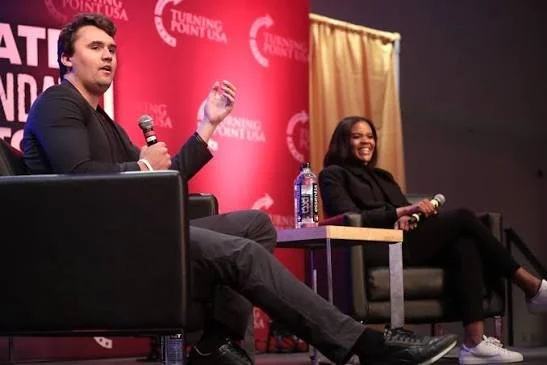
The Financial Allegations Against TPUSA
After Charlie’s death, claims began circulating that Turning Point USA had serious financial problems or was being investigated over its finances. Candace Owens amplified concerns and encouraged donors to demand their money back. Given the amount of money flowing through TPUSA, financial transparency is absolutely fair to demand.
Then something important happened. The Treasury Department reportedly communicated to Erika that Turning Point USA was not under Treasury investigation, contradicting rumors that had circulated publicly. This is exactly why patience matters.
Imagine publishing: TPUSA IS UNDER FEDERAL INVESTIGATION.
Then discovering it wasn’t. The accusation travels around the world. The correction crawls behind it. Christians cannot operate that way.
Why Is Erika Such an Easy Target?
Partly because she’s standing where Charlie used to stand. Partly because she inherited power incredibly quickly. Partly because people distrust political organizations. Partly because Charlie’s assassination created an information vacuum. And partly because people expect grief to look a certain way.
But there’s another reason. Human beings hate unanswered questions. We would rather have a terrifying explanation than no explanation. If something doesn’t make sense, our brains start connecting dots. Sometimes those dots reveal something real. Sometimes we create a picture that never existed. That’s why evidence matters.
Here’s What We Can Actually Say About Erika Kirk
We can say: Charlie Kirk was assassinated on September 10, 2025. Erika became CEO and chair of Turning Point USA eight days later. The TPUSA board says Charlie had previously told multiple executives that he wanted her to succeed him. Erika had public-facing businesses and ministry work before Charlie’s death but had not held a formal TPUSA role. Turning Point experienced enormous growth in attention following Charlie’s assassination.
Erika’s political influence increased dramatically. She quickly committed herself publicly to continuing Charlie’s mission. She publicly forgave the accused killer. She has defended TPUSA against financial allegations. And the Kirk family’s legal representatives have pushed for greater courtroom access to evidence surrounding Charlie’s killing.
Those are facts we can discuss. Here’s what we cannot currently establish: That Erika participated in planning Charlie’s assassination. That Erika knew the assassination was going to happen. That her appointment as CEO proves a prearranged conspiracy. That her public grief was fake. That her Christian statements were staged. That financial benefit proves motive. That disagreements involving Charlie’s political circle establish who killed him.
Those conclusions require evidence that has not been publicly established.
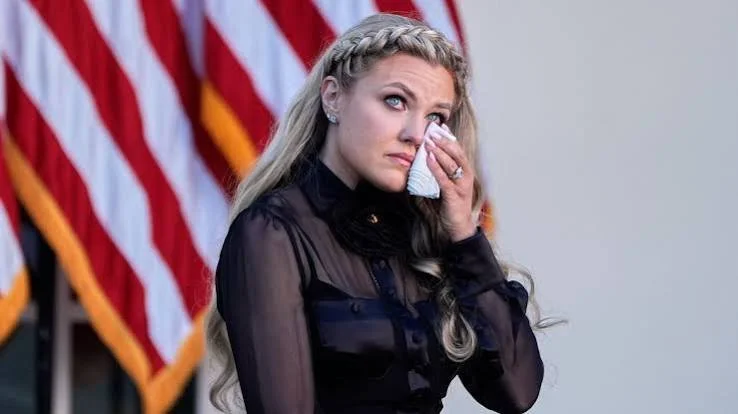
But There Are Questions I Still Think Are Fair
I would like to know more about Charlie’s succession planning.
Was there formal documentation?
When did Charlie first tell executives that Erika should replace him?
Why did he select Erika instead of an existing executive?
What preparation had she received for the position?
What authority does the CEO possess over TPUSA’s finances?
How has the organization’s donor structure changed since Charlie’s death?
What internal disagreements existed before September 10?
What communications surrounding those disagreements haven’t become public?
And perhaps most importantly: Will Turning Point USA voluntarily provide enough transparency that people don’t have to rely on internet speculation?
None of those questions accuse Erika of murder. They’re questions about governance, money and transparency surrounding an enormously influential political organization whose founder was assassinated. Those are legitimate subjects for journalism.
And Christians Need to Be Particularly Careful With Erika
There’s something uncomfortable Christians need to acknowledge. We sometimes rename gossip discernment. We hear something. We watch a clip. Someone says: “Doesn’t this seem weird?”
Then another person discovers another strange detail. Soon we’re sharing allegations about people we’ve never met based on evidence we’ve never personally examined. And because we’re “asking questions,” we convince ourselves we haven’t accused anybody. But Scripture doesn’t merely tell us to expose darkness.
It also tells us: “Thou shalt not bear false witness against thy neighbour.” — Exodus 20:16
And Proverbs 18:8 warns about the seductive nature of gossip. At the same time, Scripture does not demand blind loyalty to powerful institutions.
“Prove all things; hold fast that which is good.” — 1 Thessalonians 5:21
Notice the balance. Test everything. And: Don’t bear false witness. That’s the line Christians should walk.
Maybe Erika Is Exactly Who She Says She Is
We need to leave room for this possibility. Maybe Erika Kirk is simply a widow whose husband was murdered in front of the world. Maybe Charlie really did tell executives that he wanted his wife to inherit his mission. Maybe she stepped forward immediately because she believed allowing TPUSA to collapse would allow Charlie’s killer to accomplish something beyond taking his life. Maybe she genuinely forgave Tyler Robinson because she believes Jesus meant what He said about forgiveness. Maybe her unusual public strength is faith. Maybe the simplest explanation is the correct one. If we’re willing to entertain sinister explanations, intellectual honesty requires us to entertain that one too.
Or Maybe There Are Things We Still Don’t Know
That’s possible too. Organizations aren’t transparent about everything happening internally. Families aren’t transparent about everything happening privately. Political movements contain conflicts the public never sees. Investigations uncover evidence slowly. Trials expose information that wasn’t available beforehand.
We may know significantly more about Charlie Kirk’s final months and assassination a year from now than we know today. That’s why I refuse to pretend every question has already been answered. But I also refuse to fill unanswered spaces with accusations.
An unanswered question is not evidence for whichever theory fits inside it. Read that again. Because that is where conspiracy culture loses its way.
What Would Actually Change My Mind?
This is a question every person investigating this case should ask.
Not: “What evidence confirms what I already believe?”
But: “What evidence would make me admit I was wrong?”
If your answer is: Nothing.
Then you aren’t investigating anymore. You’ve adopted a belief. If evidence emerged directly connecting
