

Candace Owens, TPUSA & the Charlie Kirk Conspiracy Theories: What Actually Holds Up?
And depending on who you ask, she is either doing something incredibly important or incredibly dangerous.
To her supporters, Candace is asking questions mainstream journalists and conservative organizations are too afraid to touch. To her critics, she is taking coincidences, incomplete information and legitimate unanswered questions and weaving them into a conspiracy she cannot prove. But perhaps both of those descriptions are too simple. Because some of the things Candace has discussed deserve examination.
Some involve real relationships, documented disagreements and legitimate questions. Others go considerably further than the publicly established evidence currently allows. And Christians need to understand the difference.,Because this isn’t celebrity gossip.
Charlie Kirk was murdered. Tyler Robinson has been accused of killing him. A widow lost her husband. Children lost their father. People who worked alongside Charlie have been publicly accused of knowing more than they admit. And theories involving a foreign government have circulated to millions of people.
Those are enormous allegations. So instead of beginning with: “Do I believe Candace Owens?” I think we’re asking the wrong question. The better question is: What can actually be proven?
Let’s examine it.
First: Why Is Candace Owens Even Part of This Story?
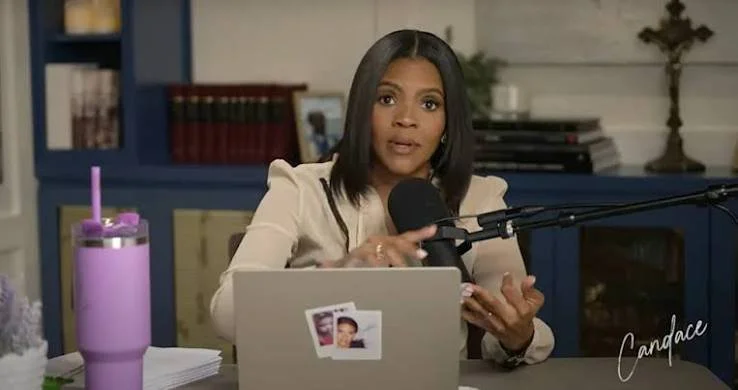
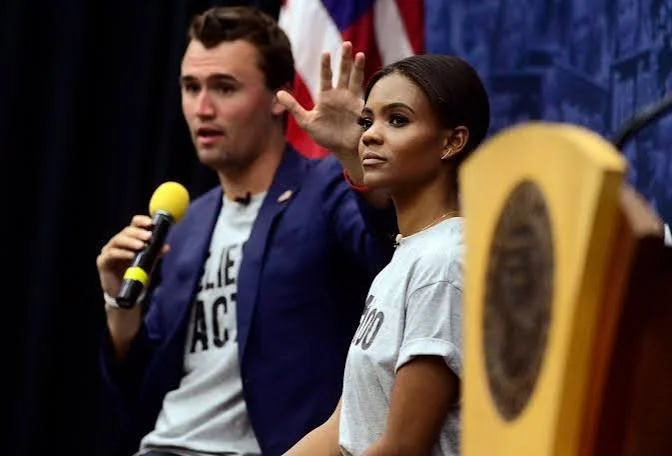
Candace wasn’t simply another commentator who became interested after Charlie died. She and Charlie had history. Candace previously worked with Turning Point USA and became one of the most recognizable conservative personalities associated with Charlie’s political movement.
Their careers became intertwined. But eventually their paths diverged. Candace became increasingly outspoken about subjects causing serious division within conservative politics—particularly Israel. Her rhetoric surrounding Israel and antisemitism eventually contributed to her departure from The Daily Wire in 2024.
Charlie, meanwhile, remained one of America’s most recognizable Christian conservative supporters of Israel. At least publicly. Because as we discussed earlier in this series, the picture became more complicated toward the end of Charlie’s life. Private communications attributed to Charlie and subsequently acknowledged as authentic by TPUSA revealed frustration with pressure from some pro-Israel donors.
Charlie reportedly complained that TPUSA had lost a donor worth roughly $2 million annually because the organization wouldn’t cancel Tucker Carlson. And in those conversations, Charlie apparently considered inviting Candace back into the conversation.
That context matters. But context is not evidence of murder. And that distinction is going to matter throughout this entire article.
What Is Candace Actually Suggesting?
This is difficult to summarize because the conversation surrounding Charlie’s assassination has evolved. Candace has questioned whether the government’s account tells the complete story.
She has raised questions involving: Tyler Robinson. The evidence against him. Turning Point USA. People surrounding Charlie. Charlie’s donor relationships. Israel. Security. The timeline surrounding the assassination. And whether people close to Charlie knew more than they initially revealed publicly.
Some of those questions can be investigated objectively. But at various points, the implications have gone much further. And that’s where we need to establish a standard.
There is an enormous difference between: “I don’t think this evidence makes sense.” and “I believe this person participated in a murder.”
The first is skepticism. The second is an accusation. And an accusation requires evidence.
CLAIM #1: Charlie Was Under Pressure From Pro-Israel Donors
VERDICT: DOCUMENTED
This isn’t merely a Candace Owens theory. Private messages that became public after Charlie’s death showed Charlie expressing significant frustration with donors. Turning Point USA acknowledged the authenticity of messages in which Charlie discussed losing a major donor over his refusal to cancel Tucker Carlson.
Charlie felt pressured. He felt bullied. And he expressed serious frustration about some Jewish donors and his relationship with the pro-Israel political movement.
That matters. We shouldn’t pretend those conversations didn’t happen because acknowledging them makes us uncomfortable.
But here’s the distinction: Donor pressure is evidence of donor pressure.
It isn’t evidence of assassination. If someone believes Charlie’s disputes with donors ultimately became connected to his murder, another evidentiary bridge is required.
Who communicated with whom? Was money transferred? Was a threat made? Was there planning? Was there surveillance? Was there coordination?
Without something connecting those events to the crime, we have important context. We don’t have a solved conspiracy.
CLAIM #2: Charlie Was Turning Against Israel Before He Died
VERDICT: PARTLY TRUE, BUT FREQUENTLY OVERSTATED
This is where nuance disappears online. There is evidence Charlie had become increasingly frustrated with certain pro-Israel donors and with political pressure surrounding Israel. That does not automatically mean Charlie became anti-Israel. Those aren’t synonymous.
Charlie could believe Israel had a right to exist while criticizing its government. He could support Jewish people while being angry with particular Jewish donors. He could support America’s relationship with Israel while questioning specific policies. And he could resent donor pressure without completely reversing his worldview.
Human beings aren’t ideological light switches. So when someone says: “Charlie was questioning aspects of his relationship with the pro-Israel movement.” There is material worth examining.
When someone says: “Charlie turned against Israel, so Israel had him killed.”We’ve traveled from documented disagreement to an accusation of state-sponsored assassination.
That requires extraordinary evidence. Publicly established evidence has not demonstrated that conclusion.
CLAIM #3: Charlie Wanted Candace Back
VERDICT: THERE IS EVIDENCE HE AT LEAST CONSIDERED IT
This detail is fascinating. Messages reported after Charlie’s death indicate Charlie discussed potentially inviting Candace Owens.
Someone involved in the conversation reportedly responded: “Please don’t invite Candace.”
It’s easy to understand why people find that significant in hindsight. Charlie was facing pressure involving Tucker Carlson. He was frustrated with donors. Israel had become an increasingly divisive issue. And he was apparently considering bringing one of Israel’s loudest conservative critics back into his orbit. But there are multiple possible explanations.
Maybe Charlie wanted reconciliation. Maybe he wanted a debate. Maybe he was reconsidering certain political positions. Maybe he simply didn’t want donors determining who could appear on his platform. Maybe he was frustrated.
We don’t know. And “we don’t know” cannot automatically become “therefore this was connected to his murder.”
CLAIM #4: TPUSA Had a Motive to Want Charlie Gone
VERDICT: NOT ESTABLISHED
This is where conspiracy reasoning can become particularly dangerous. After Charlie died, Turning Point USA survived. The organization received enormous attention. Interest increased. Donations increased. Charlie became something approaching a martyr within parts of the conservative movement. And Erika Kirk ultimately assumed leadership.
People naturally ask: Who benefited?
Investigators ask that question too. But “who benefited?” is the beginning of an investigation. It isn’t the conclusion. Someone benefiting after a death doesn’t establish that they wanted the person dead beforehand. And it certainly doesn’t establish participation in murder.
Charlie was also arguably TPUSA’s greatest asset. His personality, debates, speeches, relationships, audience and ability to mobilize young conservatives were extraordinarily difficult to replace. His death therefore created both opportunities and enormous losses for the organization.
Neither fact proves anything about who killed him. To establish TPUSA involvement, there would need to be actual evidence connecting someone within the organization to planning, facilitating or concealing Charlie’s murder. That connection has not been publicly established.

CLAIM #5: Erika Kirk’s Behavior Shows She Knows More Than She’s Saying
VERDICT: BEHAVIOR IS NOT FORENSIC EVIDENCE
This may be one of the ugliest parts of the online conversation. People analyze Erika’s face. Her interviews. Her tears. Her lack of tears. How quickly she returned publicly. How she talks about Charlie. How she dresses. How she carries herself. Her body language. And sometimes even moments lasting only seconds are slowed down and analyzed as though we’re watching forensic evidence.
We aren’t. Human grief is incredibly complicated. One widow may collapse publicly. Another may remain composed until she’s alone. One person may immediately return to work because structure keeps them functioning. Another may disappear for months.
None of those reactions establish guilt. There may absolutely be legitimate questions about Erika’s public statements. Those statements can be fact-checked. Her timeline can be examined. TPUSA’s organizational decisions can be examined. Financial records can be examined.
But: “She isn’t grieving the way I think a widow should grieve” isn’t evidence that she participated in her husband’s murder.
Christians should be especially cautious here. We’re discussing a real widow. Not a character in a Netflix crime series.
CLAIM #6: Erika Benefited From Charlie’s Death
VERDICT: TECHNICALLY TRUE IN SOME RESPECTS—BUT POTENTIALLY VERY MISLEADING
Erika became CEO and chair of Turning Point USA shortly after Charlie’s death. Objectively, she acquired enormous organizational authority. But saying: “Erika benefited from Charlie’s death” can imply something far beyond the underlying fact.
She also lost her husband. Her children lost their father. Her private life became international content. And she inherited responsibility for a massive political organization while simultaneously becoming the target of extraordinary public scrutiny.
TPUSA has said Charlie previously wanted Erika to succeed him if he died. Could that claim be examined? Absolutely. But her succession alone doesn’t establish suspicious conduct.
This is an important principle: Benefit isn’t culpability.
A spouse receives life insurance when their partner dies. A child inherits property when a parent dies. A vice president becomes president when a president dies. A business partner can acquire greater control after another partner dies.
Those consequences don’t establish murder. There has to be additional evidence.
CLAIM #7: TPUSA Was Under Federal Financial Investigation
VERDICT: A MAJOR VERSION OF THIS CLAIM HAS BEEN CONTRADICTED
This one matters because responsible investigation requires acknowledging information that hurts our preferred theory. Claims circulated that federal authorities were investigating Turning Point USA’s finances. The allegations gained enormous traction. Candace encouraged people to scrutinize TPUSA’s money. But subsequent reporting indicated that Treasury officials told Erika Kirk that TPUSA was not under a Treasury investigation.
That doesn’t mean TPUSA’s finances are beyond examination. Quite the opposite. TPUSA is an enormous nonprofit political organization. Its tax filings should be public. Its donors can be examined. Its expenditures can be examined. Its governance can be questioned.
Transparency is healthy. But if the specific allegation is: “Treasury is investigating TPUSA” and Treasury says that isn’t happening, we can’t keep repeating the original allegation as established fact. Otherwise we’re no longer investigating. We’re protecting a conclusion.
CLAIM #8: Tyler Robinson Is a Patsy
VERDICT: NOT ESTABLISHED
This may be the most consequential theory surrounding the case. Because if Tyler Robinson didn’t assassinate Charlie Kirk, then an innocent man is facing an extraordinarily serious prosecution.
That possibility should never be dismissed merely because prosecutors arrested him. Governments can make mistakes. Investigators can develop tunnel vision. Forensic evidence can be misinterpreted. Witnesses can be wrong.
That’s why defendants receive attorneys. That’s why evidence is challenged. That’s why trials exist. But the opposite is also true. We cannot decide Robinson is innocent merely because alternative theories are more interesting. Prosecutors have presented evidence they say connects Robinson to Charlie’s assassination.
His defense is challenging aspects of that evidence. Good. That’s exactly what should happen. If the government’s case is strong, it should survive scrutiny. If the government’s case contains serious problems, the defense should expose them. A courtroom requires something social media frequently doesn’t: proof.
CLAIM #9: Israel Was Involved in Charlie Kirk’s Assassination
VERDICT: NO CREDIBLE PUBLIC EVIDENCE CURRENTLY ESTABLISHES THIS
This is one of the most serious allegations in the entire conversation. And because it is so serious, our language needs to be extremely precise. We have evidence of tensions involving some pro-Israel donors. We have evidence Charlie was frustrated. We have evidence Israel was becoming a major source of disagreement within conservative politics.
Those facts don’t establish that the Israeli government assassinated Charlie Kirk. To establish state involvement in an assassination, we would need an entirely different level of evidence. Communications. Operatives. Financial transactions. Planning. Intelligence records. Logistical connections. Credible witnesses. Or comparable independent corroboration.
Without that evidence, we cannot draw the final line ourselves simply because the preceding dots exist. That isn’t a defense of Israel. No government is above investigation. It’s a defense of evidentiary standards. Accusing a foreign government of assassinating an American political activist requires considerably more than showing that the activist had political disagreements involving that country.
CLAIM #10: People Inside TPUSA Knew More Than They Initially Said
VERDICT: QUESTIONS MAY BE LEGITIMATE; A COVER-UP HAS NOT BEEN ESTABLISHED
This is probably where future reporting matters most. People naturally want to know:
Who knew about threats against Charlie?
What concerns had been raised?
What did security know?
Who communicated with Charlie immediately before the event?
Were there internal conversations after the shooting that weren’t immediately disclosed publicly?
Were statements made early in the chaos that later changed?
Those are legitimate questions. But there’s an important reality after traumatic events: Information develops. Witnesses remember additional details. Early reports contain mistakes. Organizations receive information investigators may ask them not to release. Lawyers become involved. Law enforcement controls evidence. A changing public narrative isn’t automatically proof of a cover-up.
Sometimes it is evidence that people learned more. If someone knowingly lied about a material fact, document the lie. If two statements contradict each other, put them beside each other. If records demonstrate someone knew something earlier than they admitted, show the records. That’s investigation.
Simply saying: “Their story changed.” without examining why isn’t enough.
The Biggest Strength of Candace Owens’ Investigation
Candace is willing to ask questions other people won’t. That matters. Powerful organizations need scrutiny. Political movements need internal critics. Governments need skeptical journalists. Donors shouldn’t become immune from investigation because they’re wealthy. Foreign governments shouldn’t become immune because criticizing them is politically uncomfortable. And grieving families don’t make every organization surrounding them immune from legitimate factual examination.
There is value in asking: Why?
Why did this happen?
Why doesn’t this timeline make sense?
Why did this person say that?
Why was this information withheld?
Why did this financial relationship exist?
Why did Charlie feel pressured?
Why was this person invited—or excluded?
Those questions can uncover truth. But questions only work if we’re willing to accept answers we didn’t expect.
The Biggest Danger of Candace Owens’ Investigation
There is another side. Being “the person willing to ask what nobody else will” can become an identity. And once your audience comes to you because you reveal what they supposedly don’t want people to know, there’s enormous pressure for there always to be another secret.
Another connection. Another revelation. Another person involved. Another hidden motive. Another episode. Another breadcrumb. Sometimes there really is another piece. But sometimes the evidence eventually leads somewhere boring.
Sometimes the suspicious person wasn’t involved. Sometimes the government explanation is accurate. Sometimes a coincidence is a coincidence. Sometimes someone misspoke. Sometimes people behave strangely because they’ve experienced trauma. Sometimes a donor dispute is simply a donor dispute. And sometimes the person prosecutors arrested really did commit the crime.
A genuine investigator has to remain open to all of those possibilities. Otherwise you’re not following evidence. You’re feeding a conclusion.
But Candace’s Critics Don’t Get a Free Pass Either
It would be intellectually lazy to dismiss every question because Candace Owens asked it. Calling something a “conspiracy theory” doesn’t disprove it. If Charlie’s donor messages are authentic, they’re authentic. If TPUSA had internal disagreements, those disagreements existed. If Charlie’s position on Israel was becoming more complicated, we should be allowed to examine that. If something in the prosecution’s timeline doesn’t make sense, explain it. If financial records contradict a claim, produce them. If surveillance answers a question, release it when legally appropriate. If forensic evidence establishes something, let experts explain it.
Mockery isn’t evidence. Neither is censorship. If institutions want public trust, transparency is one of the strongest tools they have. The answer to irresponsible speculation is often more verifiable information, not less.
There’s Another Possibility Nobody Likes
Candace could be right about some things and completely wrong about others.
Why does everything have to become a team?
People aren’t prophets or frauds based on whether one investigation succeeds. Candace could uncover something genuinely important on Monday and overreach dramatically on Tuesday. TPUSA could tell the truth about one issue and deserve scrutiny about another. Erika could be falsely accused of horrific things while still making organizational decisions worth questioning. Prosecutors could possess compelling evidence against Tyler Robinson while still making mistakes elsewhere in the investigation. The defense could expose legitimate weaknesses without proving an alternative conspiracy.
Reality is messy. Social media hates messy. Algorithms prefer: SHE EXPOSED EVERYTHING. Or: CANDACE COMPLETELY DEBUNKED.
Reality usually lives somewhere less clickable.
What Actually Holds Up So Far?
After stripping away the speculation, several things deserve continued examination. Charlie experienced genuine donor pressure. There were real tensions surrounding Israel within his political world.
He resisted pressure involving Tucker Carlson. He apparently considered reconnecting publicly with Candace Owens. TPUSA involved enormous money and political influence.
Charlie’s death dramatically changed the organization. Erika’s succession and TPUSA’s actions afterward are legitimate subjects for journalistic scrutiny. And Tyler Robinson’s defense has every right to aggressively challenge the government’s evidence.
Those are fair subjects. But several much larger conclusions have not been established by credible public evidence: That TPUSA orchestrated Charlie’s murder. That Erika Kirk participated in her husband’s assassination. That Israel ordered Charlie’s assassination. That Tyler Robinson was deliberately framed by TPUSA or people surrounding Charlie.
Those are enormous accusations. And enormous accusations require enormous evidence.
Christians Have an Additional Responsibility Here
There is a reason this matters specifically on a Christian website. Charlie spoke openly about Christianity. TPUSA has enormous influence among Christian conservatives. Candace frequently speaks about Christianity. Erika speaks publicly about faith. And much of the audience debating this case identifies as Christian.
So our behavior matters. We don’t get to abandon biblical standards because the story is politically interesting.
Proverbs 18:17 says: “He that is first in his own cause seemeth just; but his neighbour cometh and searcheth him.”
In other words: The first story sounds convincing until someone examines it.
That applies to the prosecution. It applies to Candace. It applies to TPUSA. It applies to Erika. It applies to journalists. And it applies to us.
