

Why the Book of Revelation Was Written
Understanding the Purpose Behind the Bible’s Most Mysterious Book
For many Christians, the book of Revelation is both fascinating and intimidating.
It contains vivid imagery:
Beasts rising from the sea.
Cosmic battles.
Trumpets and bowls of judgment.
The number 666.
A final war between good and evil.
Because of its symbolism and prophetic language, many believers avoid reading the Book of Revelation altogether. Others approach it with fear, assuming the book is primarily about catastrophic events at the end of the world. But when we step back and look at the context in which Revelation was written, something important becomes clear: The book was not written to frighten believers. It was written to encourage them.
The Historical Moment Behind Revelation
The book of Revelation was written by John the Apostle while he was exiled on the island of Patmos. Early Christians were facing growing persecution under the Roman Empire.
Refusing to worship the emperor could cost believers their social standing, their livelihood, and in some cases their lives. In the middle of this pressure, John receives a vision from Christ. That vision becomes the book of Revelation.
Understanding this context helps us see the book in a different light. Revelation was not written as a puzzle for future generations to endlessly decode. It was written as a message of hope to believers facing a hostile world.
Revelation Reveals What Is Really Happening
The word revelation itself means “unveiling.” The book pulls back the curtain on reality. While earthly events may appear chaotic or unjust, Revelation shows the deeper spiritual story unfolding behind the scenes.
It reveals that:
• God is still sovereign over history
• Evil powers do not ultimately win
• Christ will return and set things right
In other words, Revelation reminds believers that the story of the world is not out of control. God is guiding it toward a final conclusion.
A Book About Worship, Not Just Prophecy
One of the most overlooked aspects of Revelation is how much of the book focuses on worship. Again and again, John describes scenes in heaven where angels and believers gather around the throne of God.
They sing. They praise. They declare the worthiness of Christ. These moments remind readers that the center of the universe is not political power, military strength, or earthly empires.
The center of reality is the throne of God. Revelation repeatedly pulls the reader’s attention upward, away from fear and toward worship.

The Conflict Behind History
Another key theme in Revelation is the spiritual conflict behind human events. The book describes forces that oppose God and attempt to deceive humanity. These forces appear symbolically through figures like the dragon and the beasts. But Revelation also makes something clear. No matter how powerful evil appears in the moment, its time is limited.
The authority of Christ ultimately surpasses every earthly power. This message would have been incredibly encouraging to early Christians who were facing persecution. It reminded them that Rome was not the final authority in the world. God was.
The Victory of Christ
The climax of Revelation is not destruction. It is victory. Christ returns. Evil is defeated. Justice is established. And creation itself is restored.
The final chapters of Revelation describe a breathtaking vision of renewal. John sees a new heaven and a new earth where God dwells with His people. Suffering, death, and pain are removed. The story that began in Genesis finally reaches its completion.
The Marriage Between Heaven and Earth
One of the most beautiful images in Revelation is the description of the New Jerusalem. John describes the city coming down from heaven like a bride prepared for her husband. This imagery reveals something profound about God’s ultimate plan.
The goal of redemption is not simply escape from the world. It is the restoration of creation. Heaven and earth are brought together in harmony.
God dwells among His people. And the brokenness of the world is finally healed. In many ways, Revelation shows the completion of the entire biblical story. What began in the garden in Genesis ends with a renewed creation where God and humanity are fully reunited.
Why Christians Should Read Revelation
Many believers hesitate to study Revelation because they feel overwhelmed by its symbolism. But avoiding the book means missing one of Scripture’s most powerful messages.
Revelation reminds Christians that:
• Christ is still reigning
• evil will not prevail
• history is moving toward restoration
• God will ultimately make all things new
It gives believers perspective in times when the world feels uncertain. Instead of fear, the book invites readers into hope and worship.
Studying Revelation With New Eyes
Because Revelation contains complex imagery and symbolism, it helps to approach the book slowly and thoughtfully. Rather than focusing only on timelines or speculation, it is helpful to pay attention to the themes that appear throughout the book:
God’s sovereignty.
Christ’s victory.
The endurance of believers.
The restoration of creation.
When Revelation is read through this lens, it becomes less confusing and far more encouraging.
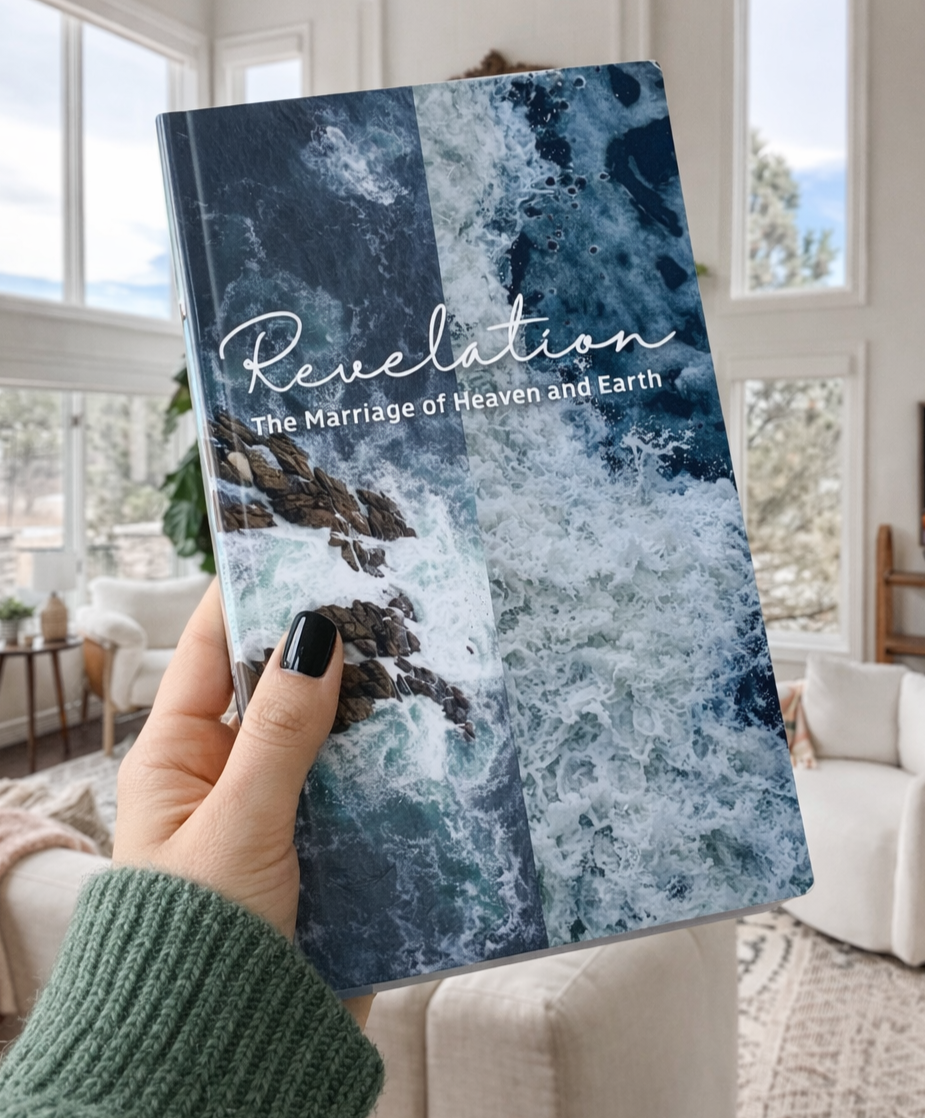
A Resource for Studying Revelation
If you’ve ever wanted to explore this book more deeply, I created a study journal designed to help readers work through Revelation thoughtfully and reflectively.
Revelation: The Marriage Between Heaven and Earth is a guided journal that walks through the book while encouraging deeper observation, reflection, and prayer.
Instead of rushing through the text, the journal invites readers to slow down and see the beauty of the story Revelation is telling. Because ultimately, the book is not just about the end of the world. It is about the restoration of the world. And the victory of the One who sits on the throne.
