

The Bible: Book #15 What It Says, Why It Matters, & How to Live It
Ezra
Rebuilding Faith After Ruin
Ezra is the book of return.
After exile, loss, and discipline, God opens a door no one could force open: the way home. Ezra shows us that restoration is possible, but it is not instant, easy, or shallow. It requires courage, obedience, and a recommitment to God’s Word.
Ezra asks a question that still matters deeply today:
How do you rebuild faith after everything familiar has been torn down?
This book reminds us that God does not just restore places, He restores people.
1. What Ezra Is About (The Big Picture)
Author: Traditionally attributed to Ezra the scribe
Audience: Israelites returning from Babylonian exile
Setting: Jerusalem, after the decree of Cyrus
Ezra records multiple waves of return from exile and focuses on two major efforts:
Rebuilding the Temple
Restoring spiritual obedience
The exile is over, but rebuilding has only begun. Ezra shows us that freedom does not automatically equal faithfulness.
2. What Ezra Reveals About God
Ezra reveals a God who is:
Faithful — keeping promises made generations earlier
Sovereign — moving pagan kings to fulfill His purposes
Patient — working through slow, imperfect obedience
Holy — calling His people back to covenant faithfulness
Restorative — rebuilding worship before rebuilding comfort
God’s hand is clearly at work, even through foreign rulers and fragile communities.
3. Major Themes in Ezra (Extended)
1. God Uses Unexpected Instruments
Cyrus, a pagan king, becomes God’s chosen instrument to initiate restoration.
2. Worship Comes Before Walls
The altar and Temple are prioritized before city security or comfort.
3. Opposition Is Normal
Resistance does not mean failure—it often confirms obedience.
4. The Centrality of God’s Word
True restoration begins with Scripture, not strategy.
5. Holiness After Rescue
God rescues His people, but still calls them to live differently.
4. Key Movements You Need to Understand
The Decree of Cyrus (Ezra 1)
God fulfills prophecy by stirring Cyrus’ heart to release the captives.
This moment reminds us:
God controls history, even when He works through unlikely people.
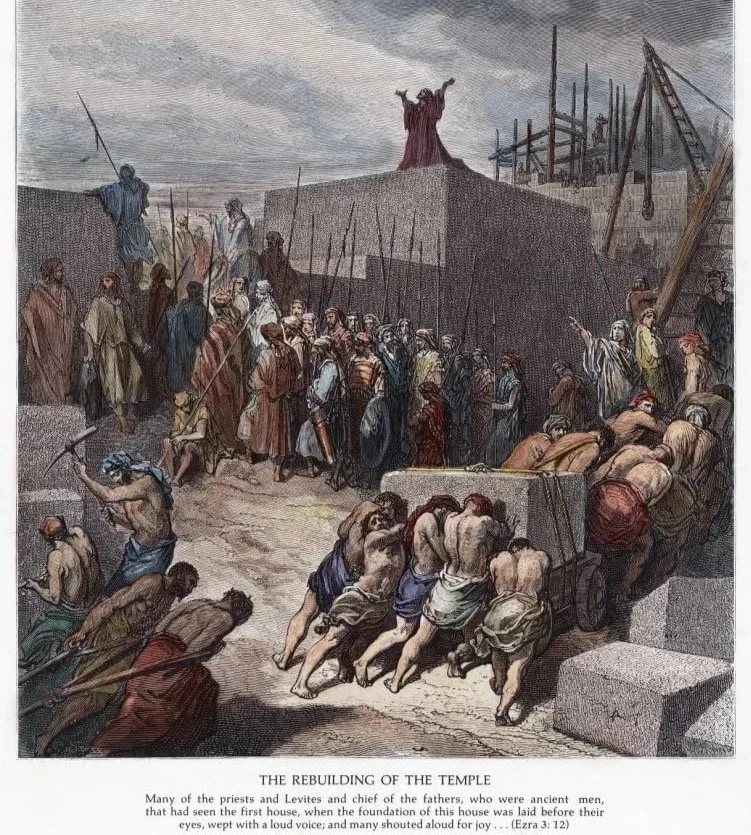
Rebuilding the Altar and Temple (Ezra 2–6)
The people rebuild amid:
celebration
grief
opposition
delay
Older generations weep while younger ones rejoice, proof that restoration is often bittersweet.
Ezra’s Arrival and Leadership (Ezra 7–10)
Ezra arrives not as a builder, but as a teacher of the Law.
He leads:
Scripture reading
repentance
covenant renewal
Ezra understands that structural rebuilding without spiritual renewal is hollow.
5. How Ezra Points to Jesus
Ezra emphasizes:
return from exile
restoration through God’s Word
covenant renewal
Jesus fulfills this trajectory:
ending spiritual exile
restoring relationship with God
embodying the Word made flesh
Ezra restores worship in a physical temple. Jesus restores worship in human hearts.
6. Common Misunderstandings About Ezra
❌ “Ezra is just about construction”
It’s about spiritual reconstruction.
❌ “Opposition means God isn’t in it”
Opposition often confirms God’s work.
❌ “Holiness is optional after grace”
Grace restores, but holiness sustains.
7. Why Ezra Matters Right Now
Ezra speaks clearly to rebuilding seasons today:
When faith feels fractured → Ezra says return
When rebuilding feels slow → Ezra says persist
When compromise tempts obedience → Ezra says hold the line
When culture resists faithfulness → Ezra says stay anchored
Ezra reminds us:
God specializes in rebuilding after ruin.
8. How to Read Ezra With Hope
Expect opposition without panic
Watch how God’s Word leads reform
Notice God’s hand through history
Let repentance guide restoration
Helpful prayer:
“God, rebuild my heart with Your truth before rebuilding my comfort.”
9. A Devotional Reflection
Ezra teaches us that restoration is rarely dramatic, but deeply meaningful.
It looks like:
faithful obedience
slow rebuilding
renewed reverence
If you’re in a season of rebuilding—spiritually, emotionally, or communally, Ezra offers this steady assurance:
God is not finished with what He disciplined. He restores what He refines. And He honors those who return to Him wholeheartedly.
10. Prayer
Restoring God,
When our lives feel broken, lead us back to You. Rebuild our worship, renew our obedience, and anchor us in Your Word. Give us perseverance when restoration feels slow. Thank You for being the God who brings Your people home.
Amen
