

When America Drops the Bomb, Christians Don’t Get to Look Away
There are some news stories we know how to grieve. A gunman walks into an American school, and nobody has to explain to us why dead children matter.
We don’t ask which political party their parents belonged to. We don’t ask whether their country had a corrupt government. We don’t ask whether the school was unfortunately located near something dangerous.
We see backpacks. Desks. Parents waiting for children who will never come home. And we understand immediately: This is horrific.
But put those children on the other side of the world, give their government a name Americans have been taught to fear, drop the bomb from an American aircraft, and suddenly our moral vocabulary gets strangely complicated.
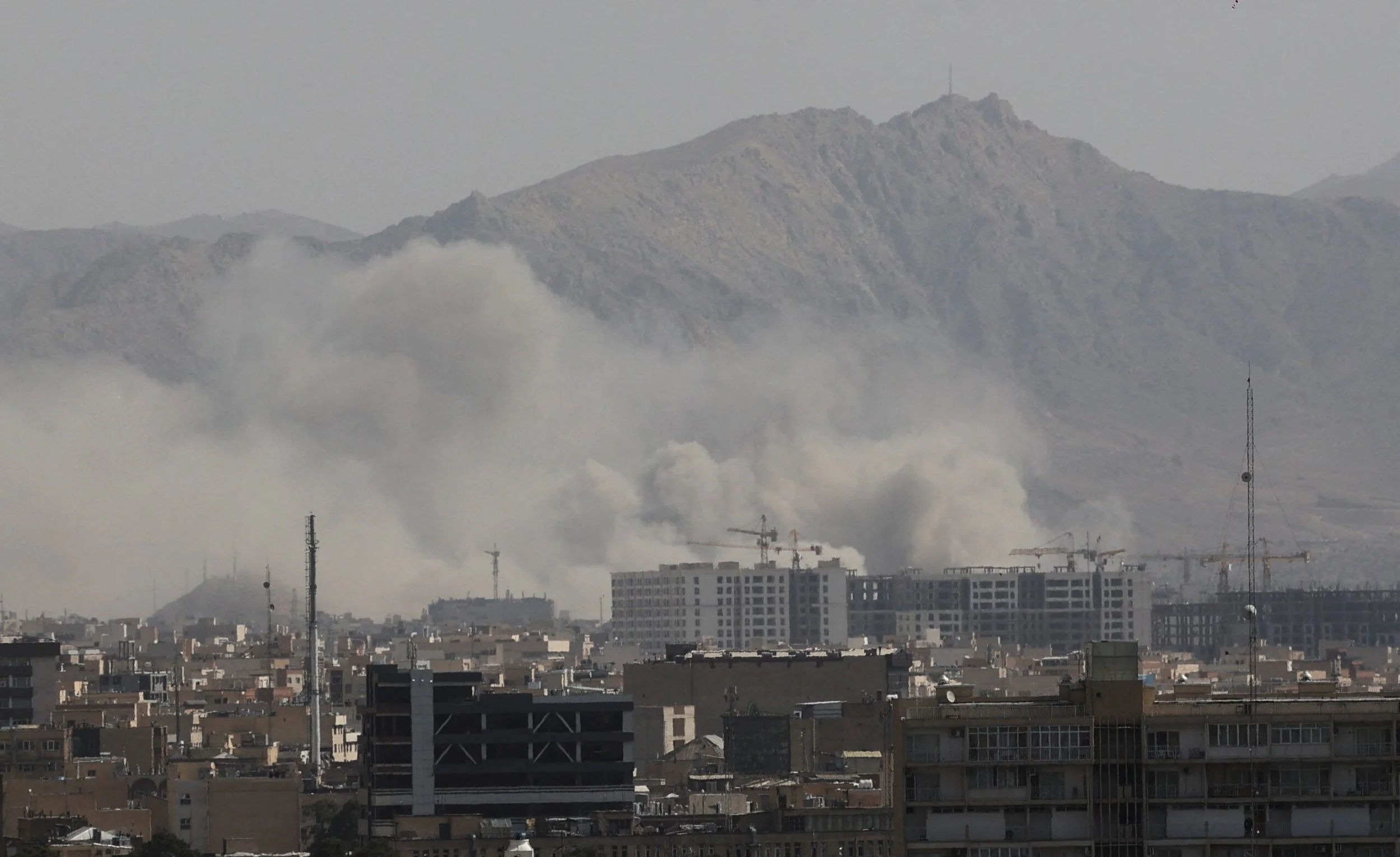
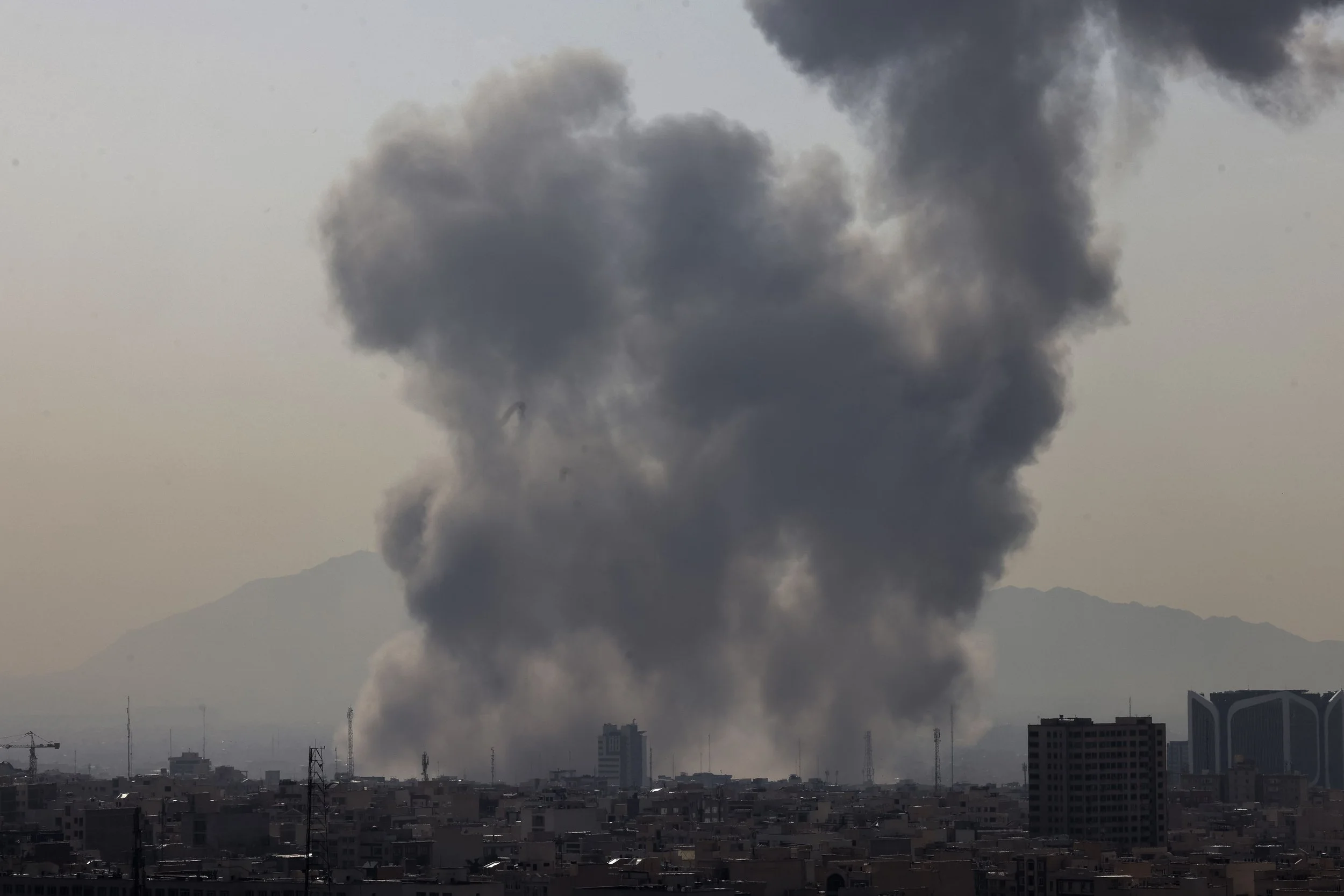
On February 28, 2026, a strike hit the Shajareh Tayyebeh primary school in Minab, Iran, during the opening attacks of the U.S.-Israeli war with Iran. Subsequent investigations and reporting have pointed toward a U.S. strike. More than 100 children were killed. (AP News)
Read that again.
Children.
Not “Iranian assets.” Not “acceptable losses.” Not numbers scrolling beneath a cable-news anchor. Children.
And before someone rushes to the comments to explain everything the Iranian regime has done wrong, understand something:
That’s exactly the problem.
Christians should not need the victims to belong to the good country before we can recognize their humanity.
Iran Can Be Wrong and We Can Still Be Wrong… This shouldn’t be difficult for Christians. We have somehow allowed politics to convince us that condemning one side requires defending the other. It doesn’t.
The Iranian government can commit evil. Terrorist organizations can commit evil. America’s enemies can threaten innocent people. And the United States can still commit an unjust act. All four sentences can be true at the same time.
Christian morality doesn’t work like a football game where you choose your team and spend the next three hours insisting every referee is biased against you.
Isaiah doesn’t say: “Woe to those who call evil good—unless your side did it.”
God’s standard doesn’t change when the flag on the uniform changes. And Christians, of all people, should understand that.
“But It Was a Military Target”
This is where the conversation gets uncomfortable.
The school was associated with a compound connected to Iran’s Revolutionary Guard, and American officials have investigated what happened there. Reporting has raised serious questions about targeting information and whether the building had been properly identified as a school. (AP News)
Those details matter. They matter legally. They matter militarily. And they matter morally. But they do not make 120 dead children disappear.
Christian ethics has never taught that war removes moral restraint. For centuries, Christians have wrestled with what is commonly called just-war tradition: the idea that even when military force can be justified, there are still moral boundaries governing how it may be used.
One of those principles is discrimination. Combatants and civilians are not morally interchangeable. Another is proportionality. The fact that a legitimate military objective exists does not automatically justify every amount of civilian destruction used to achieve it.
In other words: “There were bad guys nearby” is not the end of the moral conversation.
It may actually be the beginning of it.
Jesus Never Gave Christians an Exception for National Enemies
Then Jesus says something incredibly inconvenient: “Love your enemies and pray for those who persecute you.” — Matthew 5:44
We love that verse when the enemy is the rude coworker. It becomes considerably harder when the enemy is actually an enemy. Jesus did not say enemies aren’t dangerous. He did not say governments have no responsibility to protect people.
Romans 13 gives civil authorities genuine responsibility. But Jesus did something radical long before modern warfare existed: He refused to allow enemy status to erase someone’s humanity.
That’s important. Because governments inevitably divide the world into categories. Citizen. Ally. Enemy. Combatant. Threat. Target.
Christianity introduces another category that sits underneath all of them: Image-bearer.
Genesis 1:27 says humanity was made in the image of God. Iranian humanity included. Palestinian humanity included. Israeli humanity included. American humanity included.
The image of God doesn’t stop at the U.S. border.
Patriotism Becomes Idolatry When America Can Do No Wrong
Loving your country isn’t inherently sinful. Being grateful for your country isn’t sinful. Serving in the military isn’t inherently sinful. Wanting America to be safe isn’t sinful. But Christians need to recognize when patriotism quietly mutates into something else.
If another nation bombed a school full of American girls, would we carefully explain why the military facility nearby made the situation complicated?
Would we tell grieving American mothers that unfortunate civilian casualties happen during war?
Would we shrug and say their deaths were necessary for national security?
I doubt it.
We would put their photographs on television. We would learn their names. We would hear from their teachers. We would interview their parents. We would demand answers. And Christians would rightly grieve.
So here’s the uncomfortable question: Why should geography determine how much Christian compassion someone receives?
It shouldn’t. The kingdom of God has never been synonymous with the United States of America. America is a nation. Christ has a Kingdom. Those are not the same thing.
Philippians 3:20 reminds believers that “our citizenship is in heaven.” That doesn’t mean earthly citizenship is meaningless. It means earthly citizenship is subordinate.
Jesus gets the final allegiance. Not Washington. Not Tehran. Not Jerusalem. Not a president. Not a party. Not a flag. Jesus.
“Love Your Enemies” Doesn’t Mean “Let Your Enemies Kill You”
There’s another mistake Christians can make here. Taking civilian deaths seriously does not require pretending evil doesn’t exist. Scripture recognizes government’s responsibility to restrain wrongdoing. Romans 13 describes governing authority as bearing the sword against evil.
So Christianity doesn’t require us to say: “Nobody can ever use military force.”
But neither does Romans 13 mean: “Whatever the government does with military force is righteous.”
That’s an enormous difference. Governments can abuse authority. Armies can make catastrophic mistakes. Intelligence can fail. Leaders can lie. Military objectives can become morally corrupted. And Christians cannot outsource their conscience to the Pentagon any more than Christians living in another country can outsource theirs to their government.
Imagine Their Backpacks
This is where politics tends to protect us from reality. We say: civilian casualties.
It’s cleaner that way. Clinical. Distant. But these were children sitting in a school. There were desks. Books. Teachers. Backpacks. Parents. Plans for tomorrow. And then there weren’t.
AP’s reconstruction of the attack described a devastated school and a death toll overwhelmingly composed of children. (AP News)
We should be able to sit with that without immediately reaching for a political defense. Because sometimes our desperate need to explain why our side isn’t guilty prevents us from mourning what happened.
Romans 12:15 doesn’t say: “Mourn with those who mourn, after determining whether their government is allied with yours.”
It simply says: “Mourn with those who mourn.”
Pro-Life Has to Mean Something Here Too
This may be the part that makes people angry. So be it.
If Christians are going to say human life possesses inherent dignity because human beings are created by God, we don’t get to change that theology according to nationality.
A child’s worth isn’t created by an American birth certificate. If the unborn child in Indiana bears God’s image, the schoolgirl in Iran bears God’s image too. That doesn’t mean abortion and warfare are morally identical. They aren’t. It means the theological foundation underneath our concern for human life cannot mysteriously disappear when applying it becomes politically inconvenient.
Otherwise, perhaps what we’re defending isn’t actually the sanctity of human life. Perhaps we’re defending the sanctity of lives that belong to our tribe. Christianity gives us no such category.
The Bible Doesn’t Need America to Be the Hero
Maybe that’s what makes conversations like this so difficult. We want heroes and villains. We want America to be the hero. We want our political party to be the hero. We want our preferred president to be the hero. We want history to reassure us that people like us are standing on the righteous side.
The Bible isn’t particularly interested in preserving that fantasy. Scripture repeatedly exposes the sins of God’s own people. Israel’s prophets weren’t traitors because they condemned Israel. They condemned Israel precisely because allegiance to God required telling the truth.
Nathan confronted David. Isaiah confronted Judah. Jeremiah condemned his own nation so relentlessly that people wanted him dead. John the Baptist confronted Herod.
Truth didn’t become treason simply because the sinner possessed political power. And criticizing an American military action does not mean hating America.
Sometimes demanding that your nation behave justly is one of the most meaningful forms of patriotism available.
Christians should want America to be righteous more than we want America to be right. Those aren’t always the same thing.
We Don’t Get to Look Away
There are complicated questions surrounding war. There are legitimate debates about national defense. There are enemies who genuinely intend harm. There are military decisions made with information ordinary citizens will never possess.
Christians can disagree about when force is justified. But there is one thing we cannot permit war to do: Make us comfortable with dead children.
Not American children. Not Iranian children. Not Israeli children. Not Palestinian children. Children.
If our politics requires us to stop grieving innocent human beings because acknowledging their deaths might hurt our preferred political narrative, then our politics has begun discipling us more effectively than Jesus has.
And that’s the part Christians should fear. Because someday we will stand before a King who will not ask whether we successfully defended America’s reputation online. He will not ask whether we embarrassed the Republicans. He will not ask whether we helped the Democrats. He will not ask whether our position polled well. We belong to a Kingdom where the King told us to love our enemies.
Where every human being bears God’s image. Where justice matters even when justice implicates us. And where truth remains truth regardless of which flag is flying above the person who violated it.
So yes, pray for America. Pray for our troops. Pray for our leaders. Pray for our protection. But pray something else too: Lord, don’t let my love for my country become greater than my love for Your truth.
Because when America drops the bomb, Christians don’t get to look away. Especially when looking would force us to admit that this time, the people who need accountability might be wearing our flag.
