

The Bible Was Never Meant to Be Read as Separate Stories
Many people grow up learning the stories of the Bible. Noah and the ark. David and Goliath. Esther saving her people. Daniel in the lion’s den. They are often taught as individual moments, each with its own moral lesson.
Be brave like David. Be faithful like Daniel. Stand up for what is right like Esther. But something quietly happens when the Bible is taught this way.
The stories become disconnected. Instead of seeing one unfolding narrative, we see scattered examples of good behavior. Scripture slowly becomes a collection of lessons about us instead of a revelation about what God is doing in the world.
Yet the Bible itself tells us something very different. In Luke 24, after the resurrection, Jesus walks with two disciples on the road to Emmaus. They are confused, discouraged, and struggling to understand what has happened. The Messiah they hoped for has been crucified.
Then Jesus does something remarkable. Scripture says that beginning with Moses and all the Prophets, He explained to them what was said in all the Scriptures concerning Himself (Luke 24:27).
In other words, Jesus teaches them how to read the Bible. Not as disconnected stories. But as one story that ultimately points to Him.
The Bible Is a Thread, Not a Collection
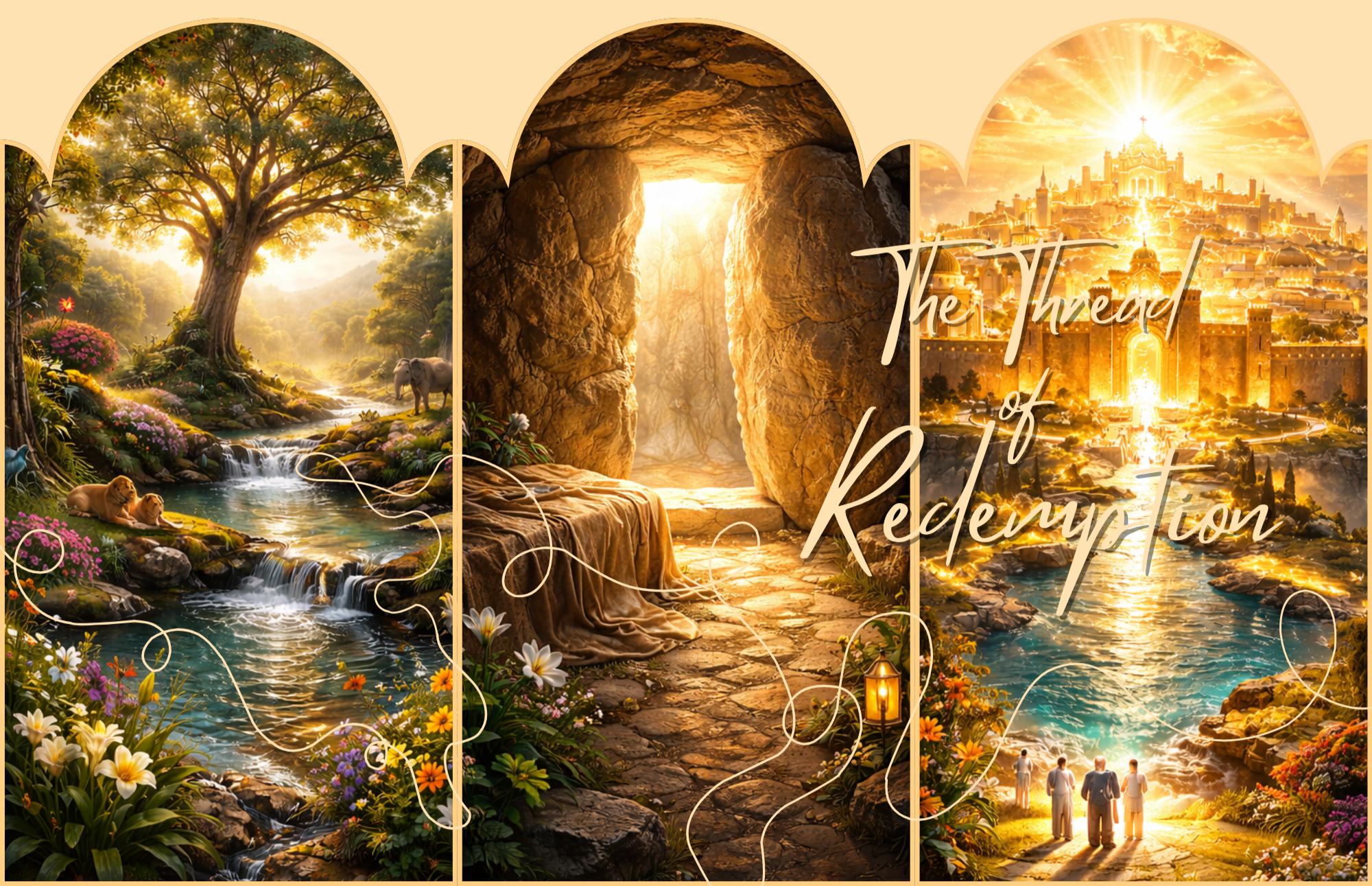
From the opening chapters of Genesis to the final vision in Revelation, Scripture follows a single redemptive thread. It begins in a garden where humanity falls into sin and exile. It continues through covenants made with Abraham and Israel. It unfolds through sacrifices, kings, prophets, and promises.
At every stage, something deeper is being prepared. The Passover lamb foreshadows a greater sacrifice. The temple points toward God dwelling with His people. The throne of David anticipates a greater King. The exile hints at the need for a deeper restoration.
What appears at first to be separate events is actually part of a carefully woven narrative. The thread runs through the entire Bible. And it leads directly to Jesus.
The Moment the Thread Becomes Clear
When Christ arrives, the pieces begin to align. The Lamb who takes away sin. The King who fulfills David’s throne. The true temple where God meets humanity. The suffering servant foretold by the prophets. The cross is not an interruption of the story. It is the center of it.
What began as a promise in Eden reaches its fulfillment in the death and resurrection of Christ. And the story does not end there. Revelation shows the final movement of that same thread, a restored creation, a redeemed people, and a King reigning forever. The garden becomes a city. The curse is undone. God dwells with His people again.
Learning to Read the Bible Differently
When we begin to see this redemptive thread, Scripture changes. The stories are still powerful. The lessons are still meaningful. But now they are part of something larger.
Instead of asking first, “What does this teach me about my life?” We begin asking a deeper question: How does this reveal what God is doing to redeem the world?
And when that shift happens, the Bible becomes far more than a collection of inspiring moments. It becomes the story of a God who refuses to abandon His creation and who weaves redemption through every generation until the work is finished.
A Journey Through the Whole Story
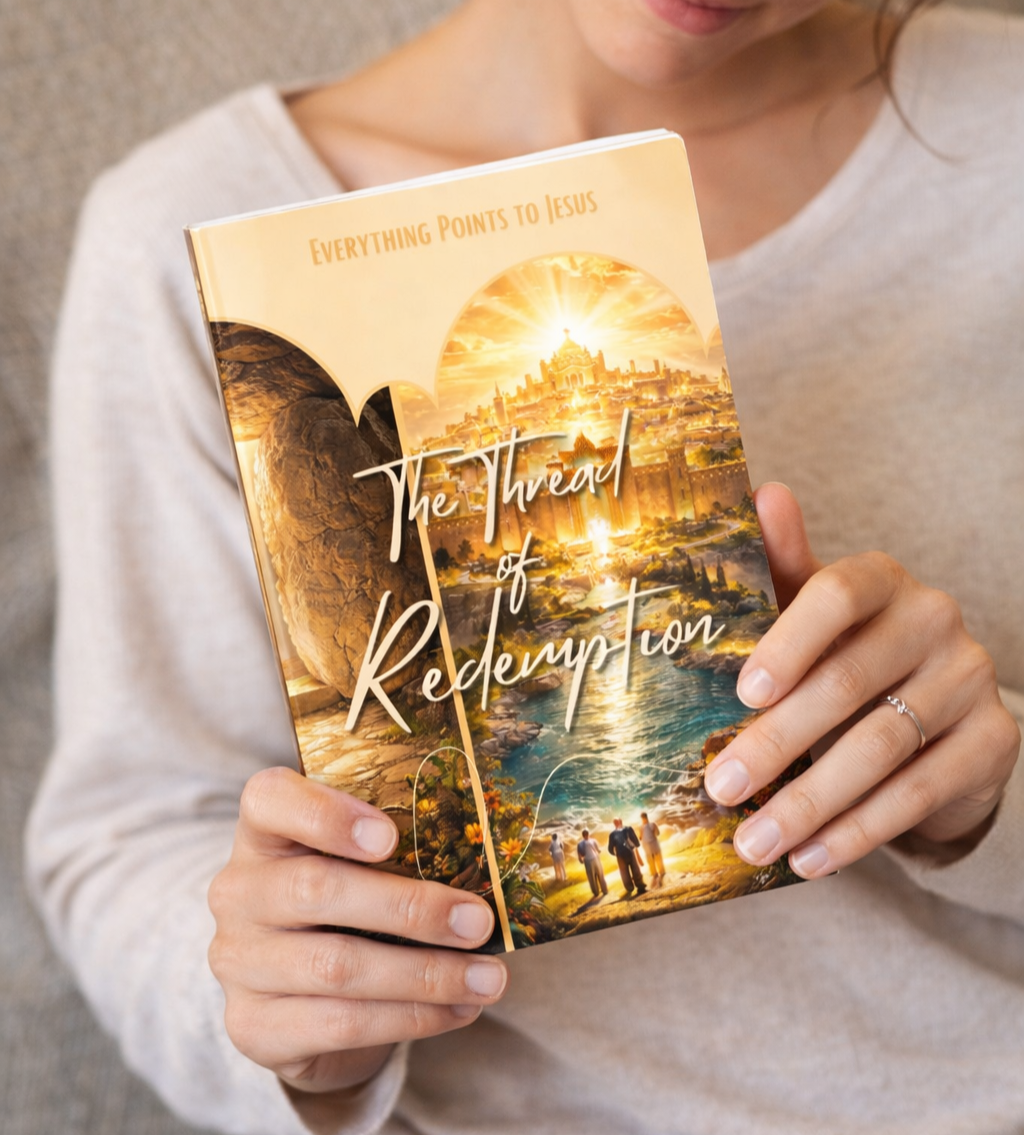
This is the journey explored in my book The Thread of Redemption: Everything Points to Jesus.
The book traces the connections across Scripture, from Eden to the cross to the New Jerusalem, showing how the promises, patterns, covenants, and prophecies of the Bible all converge in Christ.
Because the Bible was never meant to be read as scattered pieces. It was meant to be seen as one unfolding story. And once you begin to see the thread, it becomes impossible to miss.
