

The Bible: Book #9 What It Says, Why It Matters, & How to Live It
1 Samuel
Leadership, Obedience, and the Cost of Choosing a King
First Samuel is the book where everything changes.
Israel moves from a loose tribal system into monarchy. Judges ends with chaos and the cry for order. First Samuel shows what happens when God’s people want stability, but don’t always want God’s leadership on God’s terms.
This book asks a piercing question:
What happens when we ask God for something—but not for the reasons He intended?
First Samuel is not just about kings. It’s about who gets authority, what obedience really means, and why God cares more about the heart than appearances.
1. What 1 Samuel Is About (The Big Picture)
Author: Traditionally attributed to Samuel, with later prophetic compilation
Audience: Israel transitioning from judges to monarchy
Setting: From tribal leadership to the reign of Saul
First Samuel bridges two worlds:
spiritual leadership through judges and prophets
political leadership through kings
The book traces:
the rise of Samuel
the people’s demand for a king
Saul’s ascent and failure
the quiet anointing of David
This is a story of asking, receiving, and learning the cost.
2. What 1 Samuel Reveals About God
First Samuel reveals a God who is:
Sovereign — ruling even when people choose poorly
Relational — listening to prayer (especially Hannah’s)
Patient — allowing people to learn through consequences
Discerning — seeing the heart, not appearances
Faithful — preparing the future even amid failure
God does not lose control when Israel demands a king. But He does allow them to experience the weight of that choice.
3. Major Themes in 1 Samuel (Extended)
1. God Hears the Humble
The book opens not with power but prayer. Hannah’s cry sets the spiritual tone for everything that follows.
2. Authority Must Flow from Obedience
Leadership without submission to God leads to collapse.
3. The Danger of Image-Based Leadership
Saul looks like a king, but he does not obey like one.
4. The Heart Over the Crown
God values inward faithfulness more than outward success.
5. God Prepares the Next Generation Quietly
David is anointed long before he rules. God works ahead of visible change.
4. Key Movements You Need to Understand
Hannah and Samuel (1 Samuel 1–3)
Hannah’s prayer introduces a theme:
God raises leaders through humility, not ambition.
Samuel grows up hearing God’s voice while Eli’s household collapses due to unchecked sin.
The Ark and God’s Holiness (1 Samuel 4–7)
Israel treats the Ark like a weapon instead of God’s presence and suffers defeat.
This teaches us:
God is not a tool to be used; He is a King to be honored.
Israel Demands a King (1 Samuel 8)
The people ask for a king “like the other nations.” God warns them, but grants their request.
This moment reveals:
fear disguised as wisdom
desire for control over trust
leadership chosen for comfort, not obedience
Saul’s Rise and Fall (1 Samuel 9–15)
Saul begins humbly but quickly drifts.
His downfall centers on one phrase:
“To obey is better than sacrifice.”
Saul substitutes religious appearance for obedience and loses the kingdom.
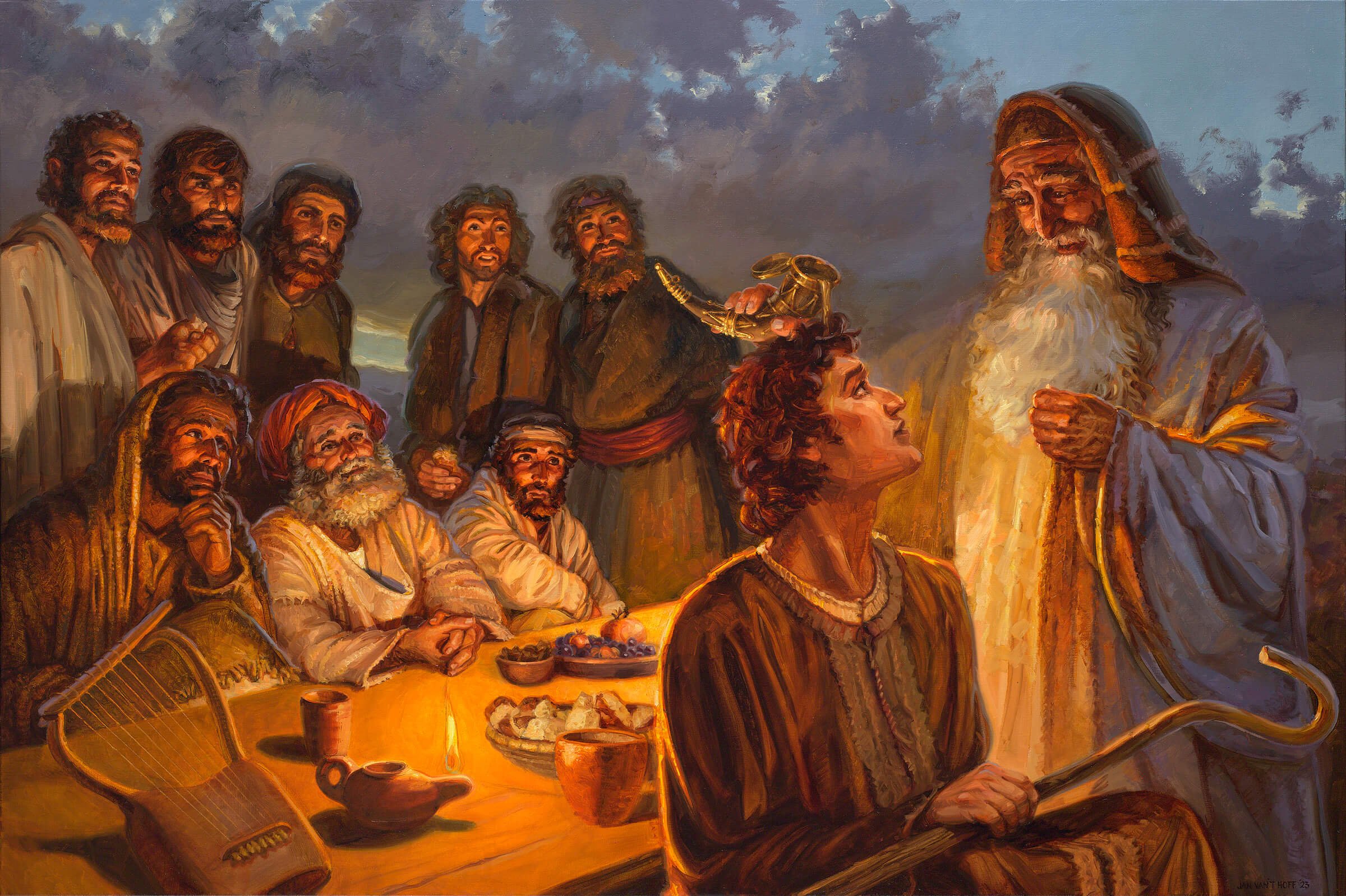
David Anointed (1 Samuel 16)
God chooses the youngest, overlooked son.
“Man looks at the outward appearance, but the Lord looks at the heart.”
David’s anointing begins a long season of preparation, not instant reward.
David and Goliath (1 Samuel 17)
This is not a story about bravery alone, it’s about confidence rooted in God’s character. David trusts God because he knows Him, not because he wants fame.
5. How 1 Samuel Points to Jesus
First Samuel sets the stage for Christ.
Saul → a king chosen by people
David → a king chosen by God
David’s heart → foreshadowing Christ’s obedience
Failed leadership → need for a perfect King
Jesus fulfills what Israel longed for:
righteous leadership
perfect obedience
humility with authority
David’s line leads directly to Christ.
6. Common Misunderstandings About 1 Samuel
❌ “The people were wrong to want a king”
The issue wasn’t the request—it was the motive.
❌ “Saul failed because he wasn’t talented”
Saul failed because he wouldn’t obey fully.
❌ “David succeeds because he’s fearless”
David succeeds because he trusts God deeply.
7. Why 1 Samuel Matters Right Now
First Samuel speaks clearly into modern life:
When leadership disappoints → God still reigns
When image outweighs integrity → consequences follow
When obedience feels costly → God honors faithfulness
When waiting feels frustrating → God is preparing something deeper
This book reminds us: God’s plan doesn’t collapse when human leadership does.
8. How to Read 1 Samuel Without Getting Lost
Watch the contrast between Saul and David
Pay attention to prayer and obedience
Notice how God speaks before He acts
Read it as a story about leadership under God
Helpful prayer:
“God, shape my heart before You change my circumstances.”
9. A Devotional Reflection
First Samuel teaches us that not everything God allows is what He prefers.
Sometimes God grants requests so we can learn the difference between:
control and trust
appearance and obedience
power and humility
If you’re in a season of disappointment with leadership, your own or others’, this book gently reminds you: God is still writing the story. And He always sees the heart.
10. Prayer
Sovereign God,
Teach us to trust Your leadership above all others. Guard us from valuing image over obedience. Shape our hearts before You place us in positions of influence. Help us follow You faithfully, even when the path is unclear.
Amen
